Area Rugs vs Runners vs Layered Rugs: What’s Best for Your Space
Choosing between area rugs, runners, and layered rugs depends entirely on your room’s shape, function, and furniture layout. Area rugs work best for anchoring furniture in living rooms and bedrooms, runner rugs excel in hallways and narrow spaces, while layered rugs offer maximum design flexibility for complex layouts and evolving design needs.
What This Guide Covers
This comprehensive comparison examines all three rug types with room-by-room recommendations, precise sizing guidelines, and proven styling techniques. We focus on practical selection criteria rather than general decorating advice, helping you match rug types to specific spatial challenges.
Who This Is For
This guide is designed for homeowners planning room layouts, renters looking to define spaces without permanent changes, and anyone confused about rug selection for specific areas. Whether you’re furnishing your first apartment or redesigning established rooms, you’ll find actionable guidance for each scenario.
Why This Matters
The wrong rug choice can make rooms feel disconnected, cramped, or unfinished, while the right selection enhances traffic flow and visual comfort. A dining room rug that’s too small creates awkward furniture placement, just as an oversized area rug can overwhelm a seating area.
What You’ll Learn:
- When to choose each rug type based on room function and layout
- Proper sizing guidelines for different spaces and furniture arrangements
- Effective rug layering techniques for enhanced texture and flexibility
- Solutions for common layout challenges in open concept and narrow spaces
Understanding the Three Rug Categories
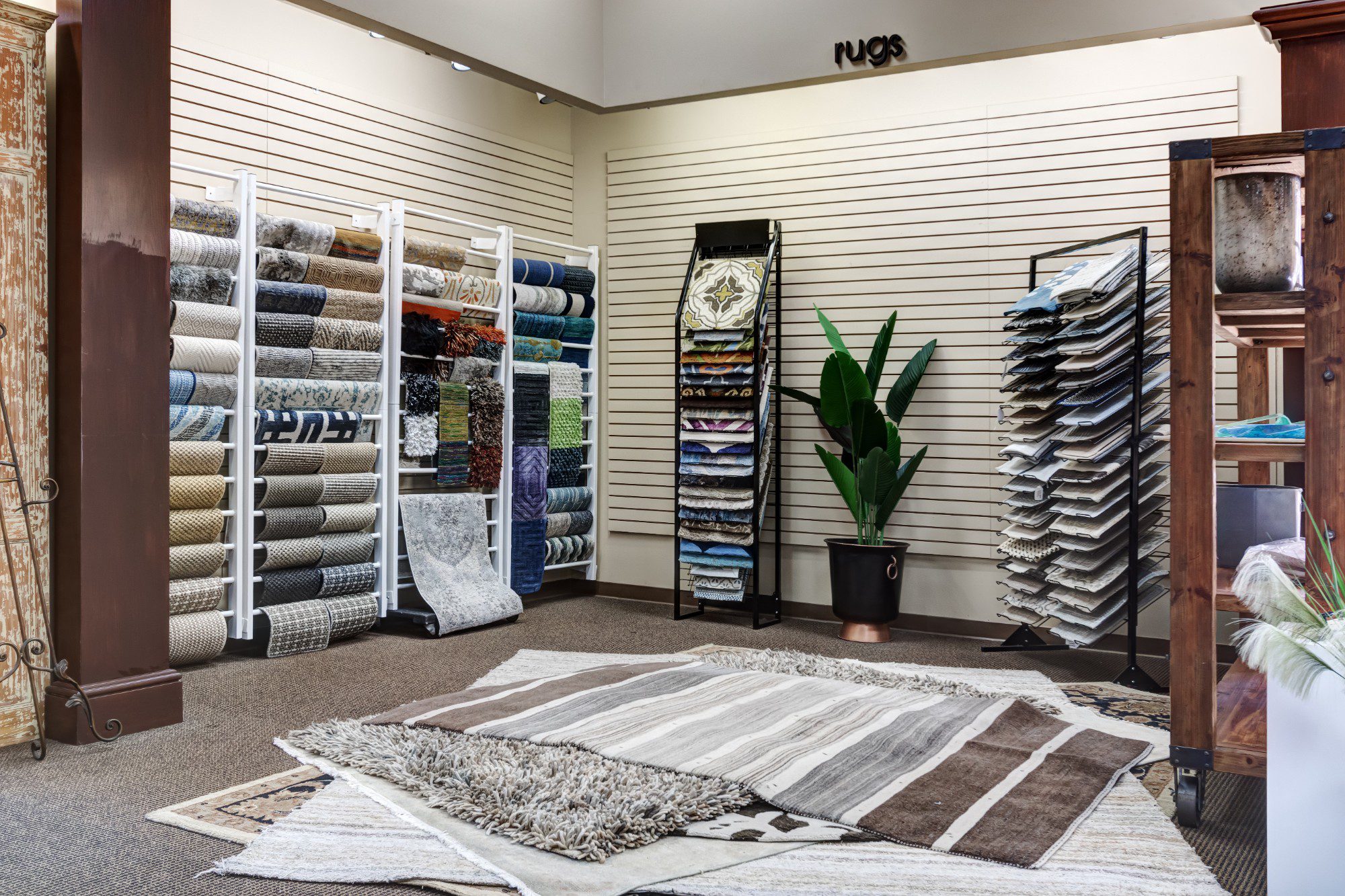
Area rugs function as large rectangular or round floor coverings that anchor furniture groupings and define conversation areas. These substantial rugs typically range from 5×8 feet to 9×12 feet, serving as the foundation for room design by unifying seating arrangements and creating visual boundaries.
Runner rugs solve linear space challenges with their long, narrow format—typically 2-3 feet wide and 6-14 feet long—making them ideal for hallways, entryways, and transitional areas. Layered rugs represent a strategic approach where multiple rugs are combined within the same space to create depth, accommodate seasonal changes, or address budget constraints while maximizing design impact.
Understanding these distinctions matters because each type serves different spatial and functional needs, and mixing them inappropriately can make a room feel disjointed rather than cohesive.
Area Rugs: The Foundation of Room Design
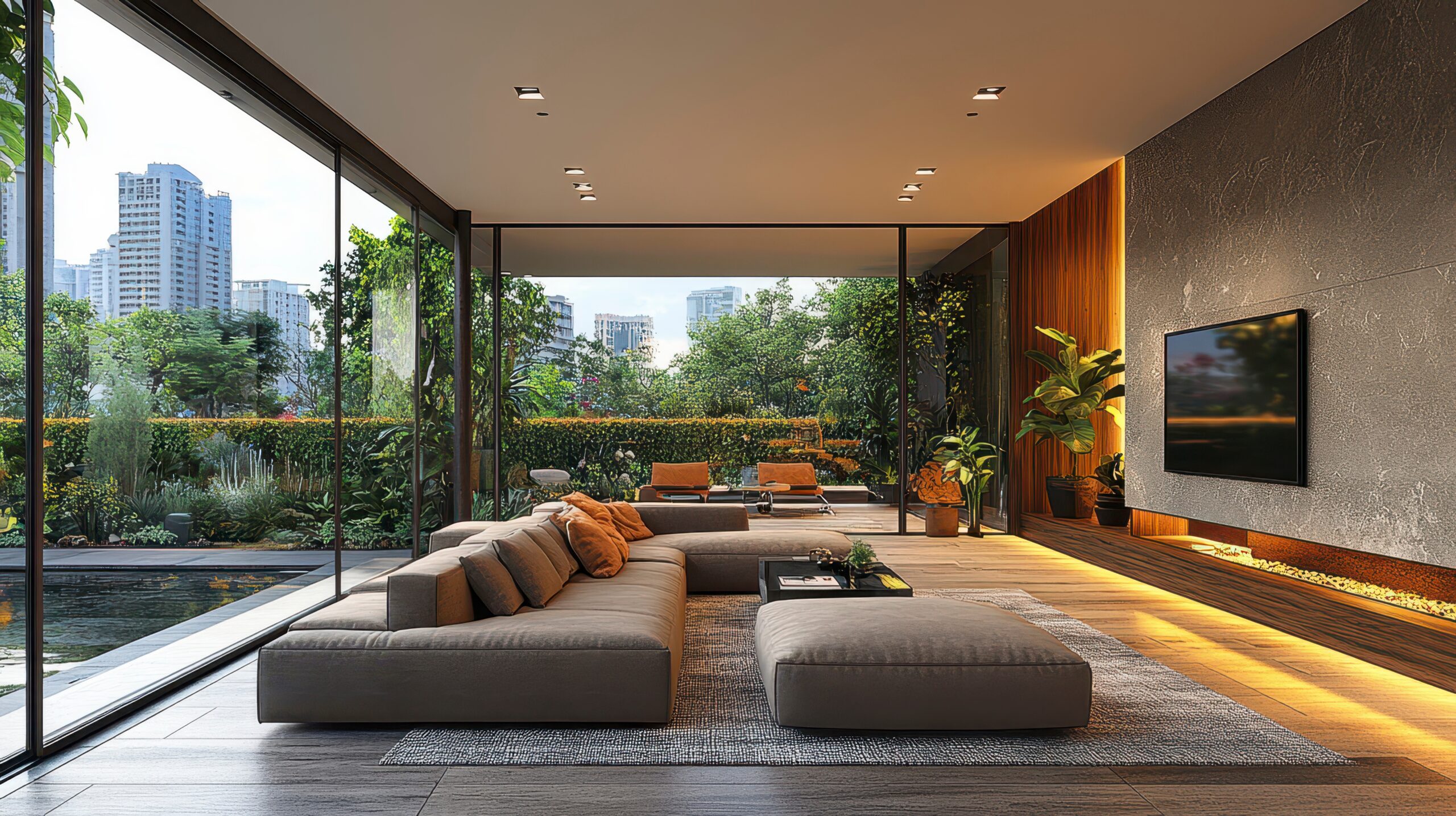
Area rugs anchor furniture arrangements by providing a unified base that visually connects seating pieces, coffee tables, and other major furniture elements. A well-chosen living room rug should accommodate either all furniture legs or at least the front legs of sofas and chairs, creating stability and visual cohesion.
Standard rug sizes correspond to common furniture arrangements: 5×8 feet works for smaller seating groups, 8×10 feet suits most living rooms, while 9×12 feet accommodates larger spaces with multiple seating areas. The right rug acts as the room’s foundation, making furniture feel intentionally placed rather than scattered.
This connects to room functionality because area rugs work best in spaces with sufficient floor area and defined furniture groupings—primarily living rooms, dining rooms, and bedrooms with adequate square footage.
Runners: Solutions for Linear Spaces
Runner rugs excel in narrow corridors, hallways, and transitional spaces where traditional area rugs would overwhelm the proportions. Their elongated format guides traffic flow while adding comfort underfoot without consuming excessive visual space.
Entryway rugs in runner format provide welcome mats that can extend several feet into foyers, while kitchen runners offer cushioning along work areas and sink zones. The key advantage lies in their ability to enhance narrow spaces without crowding—something larger rugs cannot achieve in confined areas.
Building on area rug principles, runners maintain the same anchoring function but solve different spatial problems, particularly in homes with long hallways or galley-style kitchens where traditional rugs would interrupt traffic flow.
Layered Rugs: Creative Combinations for Complex Needs
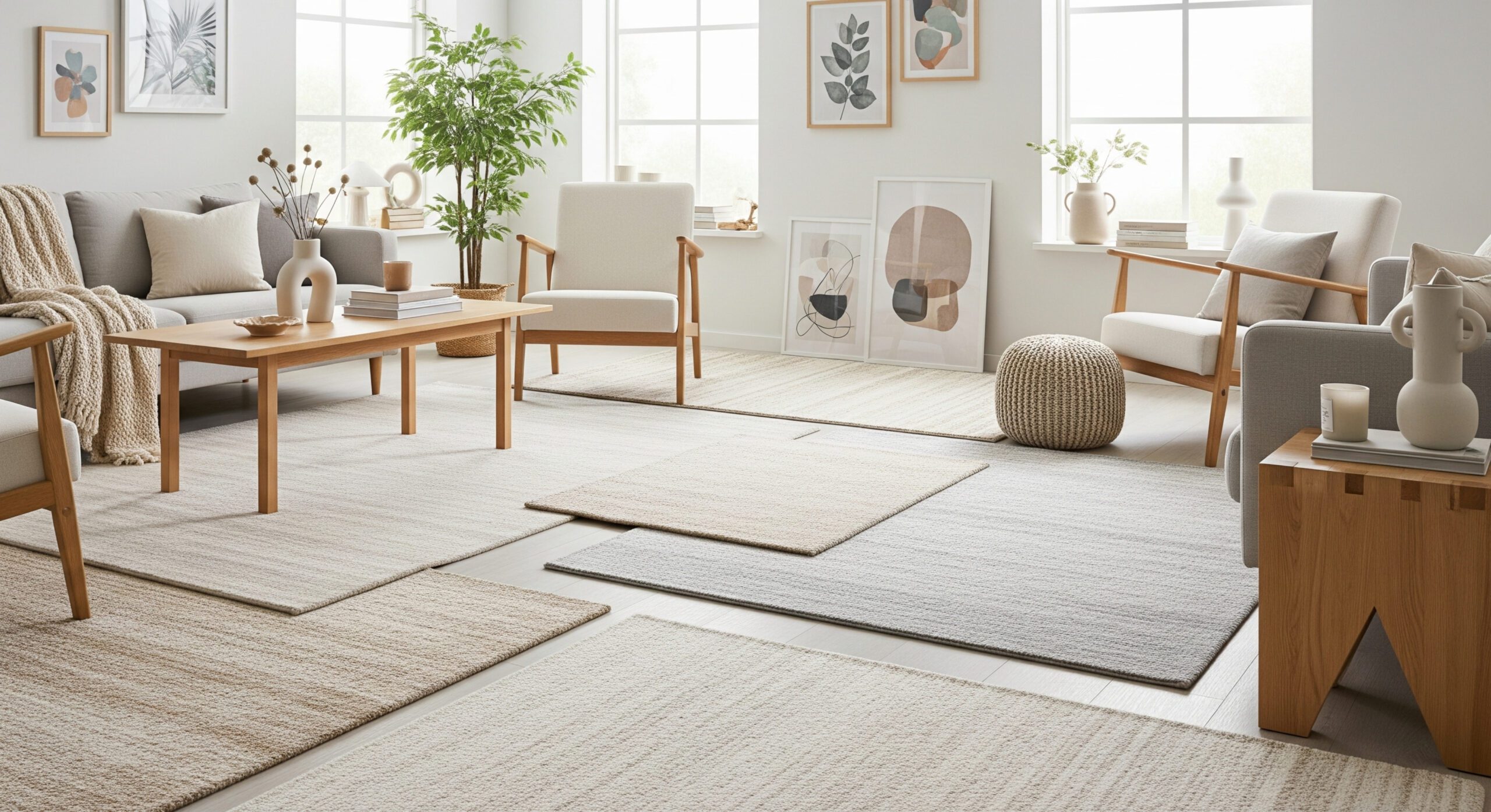
Layered rugs involve combining multiple floor coverings within the same space to create enhanced texture, accommodate seasonal style changes, or solve budget limitations. Common approaches include placing a smaller patterned rug over a larger neutral rug, or combining different rug materials for varied tactile experiences.
This technique allows homeowners to start with an affordable natural fiber rug as a base layer, then add colorful accent rugs or plush rugs seasonally. The layering approach works particularly well over wall to wall carpet, where adding area rugs creates visual interest without renovation costs.
Building on both area rugs and runners, layered combinations can incorporate elements of each type—using a large neutral rug as foundation with smaller accent rugs or even strategic runner placement to define traffic patterns within larger spaces.
Transition: Understanding these fundamental differences enables strategic selection based on specific room requirements and functional needs.
Room-by-Room Rug Selection Guide
The room function directly determines the optimal rug choice, as each space presents unique challenges for traffic flow, furniture arrangement, and comfort requirements.
Living Rooms: Area Rugs vs Layered Options
Single large area rugs (8×10 or 9×12 feet) work best for traditional furniture arrangements where sofas, chairs, and coffee tables need visual unification. The living room rug should extend beyond the seating area enough that all major furniture pieces feel connected—ideally with front legs of all seating anchored on the rug.
Layered rugs become preferable in open concept spaces where seasonal style changes matter, or when budget constraints prevent purchasing one large quality rug. Starting with a large natural fiber rug like jute or seagrass as foundation, then layering a smaller wool rug or flatweave rug creates flexibility and visual interest.
Specific sizing guidelines require measuring the entire seating group rather than the room itself. In average living rooms, ensure at least 18 inches of exposed floor around the rug perimeter, while larger rooms can accommodate rugs that nearly reach the walls.
Hallways and Entryways: Runner Territory
Runners are the clear choice for hallways under 4 feet wide and entryway corridors where traffic flow takes precedence over furniture anchoring. Proper runner sizing requires leaving 6-12 inches of exposed floor on each side for visual balance and practical movement.
For high traffic areas like main hallways, low pile rugs in synthetic materials or durable natural fibers like seagrass rugs provide longevity. Entryway rugs need sufficient length to accommodate the door swing while providing adequate step space—typically 6-8 feet minimum.
Alternative approaches work in wider entryways or foyers with furniture: small area rugs can define seating areas near benches or console tables, but runner format remains most practical for pure transitional spaces.
Dining Rooms: Size and Function Considerations
Dining room rugs require specific sizing to accommodate chair movement during meals. The rug must extend 24-30 inches beyond dining table edges on all sides, ensuring dining chairs remain on the rug even when pulled out for seating.
In narrow breakfast nooks or galley-style dining areas, runners can work effectively along one side of the table, though this limits chair placement options. The dining space must be wide enough to maintain traffic flow around the runner edges.
Layered solutions work in open concept dining areas that blend with living spaces, where a large area rug can anchor the combined zone with smaller accent rugs defining the specific dining area within the larger floor plan.
Bedrooms: Versatile Options for Comfort
Area rug placement in bedrooms centers the rug under the bed, extending 18-24 inches beyond the footboard and sides. For a king bed, an 8×10 foot rug provides adequate coverage, while smaller beds can use 6×9 or 5×8 sizes effectively.
Runner alternatives include placing runners alongside the bed or at the foot for smaller rooms where full area rugs would overwhelm the space. Bedroom rugs prioritize softness underfoot over durability, making high pile rugs and plush materials appropriate choices.
Layered approaches combine a large neutral rug with smaller accent pieces for seasonal texture changes—particularly effective when starting with a natural fiber rug and adding wool rugs or cotton rugs for enhanced comfort during colder months.
Transition: These room-specific guidelines require precise implementation for optimal results.
Sizing, Placement, and Installation Strategies
Building on room-specific guidance, successful rug selection demands technical precision in measurement, placement testing, and installation considerations that ensure proper proportion and function.
Step-by-Step: Measuring for the Right Rug Type
When to use this: Before purchasing any rug to ensure accurate fit and visual proportion in your specific space.
- Measure furniture groupings, not rooms: Record the dimensions of seating arrangements, dining table setups, or pathway widths rather than overall room measurements. Add 24-30 inches to dining table dimensions, or 18 inches beyond seating groups.
- Test sizes with painter’s tape: Outline different rug sizes on the floor using painter’s tape to visualize how various dimensions will impact traffic flow and furniture placement before purchasing.
- Check door clearances and traffic patterns: Ensure runners allow comfortable passage width, and area rugs don’t interfere with door swings or natural walking paths through the room.
- Plan furniture leg placement: Determine whether all furniture legs, front legs only, or no legs will rest on the rug, as this affects both rug size selection and visual stability of the arrangement.
Comparison: Single Large Rug vs Multiple Smaller Rugs
| Feature | Single Large Rug | Multiple Smaller Rugs |
|---|---|---|
| Upfront Cost | Higher investment for quality materials | Lower individual cost, flexible budget |
| Visual Impact | Unified, cohesive foundation | Flexible zones, seasonal variation |
| Rearrangement | Limited layout options | Easy repositioning and swapping |
| Maintenance | One cleaning zone, simpler care | Multiple cleaning areas, varied needs |
| Design Evolution | Permanent commitment to style | Adaptable to changing preferences |
Single large area rugs work best for stable furniture arrangements and classic design approaches, while multiple smaller rugs suit renters, budget-conscious buyers, and those who enjoy seasonal decorating changes.
Transition: Even with proper sizing and selection, common implementation challenges require specific solutions.
Common Challenges and Solutions
Implementation problems often arise from a misunderstanding of how rug types interact with room proportions, furniture placement, and daily living patterns.
Challenge 1: Open Concept Spaces Feel Disconnected
Solution: Use rug layering to define separate zones while maintaining visual flow between areas through coordinated colors and complementary textures.
Layer a large neutral rug as a foundation across the main living area, then add smaller accent rugs to define specific functions—a round rug under a reading chair, or a colorful rug marking the dining area within the larger space.
Challenge 2: Long, Narrow Rooms Are Hard to Furnish
Solution: Choose runners to emphasize length and guide traffic flow, or place area rugs horizontally to create the illusion of width rather than emphasizing the room’s narrow proportions.
Avoid multiple small rugs that chop up the space visually—instead, use one appropriately-sized runner or a rectangular rug positioned to counteract the room’s elongated feel.
Challenge 3: Budget Constraints Limit Large Rug Options
Solution: Start with an affordable, large natural fiber rug as a foundation, then layer smaller accent pieces over time as budget allows for quality additions.
Natural fiber rugs like jute or seagrass provide texture and coverage at lower cost than wool rugs or synthetic materials, creating a foundation for future layering with higher-quality accent pieces.
Transition: These strategic approaches enable confident rug selection and implementation regardless of space constraints or budget limitations.
Conclusion and Next Steps
Area rugs anchor furniture groupings and work best in established living rooms and bedrooms. Runner rugs address narrow-space challenges in hallways and transitional areas, while layered rugs offer maximum design flexibility for evolving needs and complex layouts. The key lies in matching rug type to room function rather than following generic decorating rules.
To get started:
- Measure your space and furniture arrangement using the specific guidelines for your room type and intended rug function
- Determine primary function needs—traffic flow, furniture anchoring, or zone definition—before considering style preferences
- Test sizes with painter’s tape to visualize proportion and traffic flow before making final purchasing decisions
Related Topics: Consider exploring rug materials and pile height selection for specific room conditions, color coordination techniques for layered approaches, and rug pad selection for different floor types and rug materials.
FAQs: Area Rugs vs Runners vs Layered Rugs
1. What’s the difference between an area rug and a runner?
Area rugs anchor a full room or furniture grouping, while runners are intentionally designed for long, narrow pathways. Both serve different functions but work together to create balanced, well-designed spaces.
2. How do I know whether my space needs an area rug or a runner?
Choose an area rug for living rooms, dining rooms, and bedrooms where furniture needs a visual foundation. Use a runner in hallways, entry corridors, kitchens, or tight transition areas where you need softness without overcrowding.
3. Can I mix area rugs and runners in the same room?
Yes—thoughtful layering and placement help guide movement and define zones, especially in open-concept layouts. Coordinating colors and textures creates a cohesive, professionally designed look.
4. What size area rug is right for my living room?
Most living rooms need an 8×10 or 9×12 rug. The goal is to have the front legs—or ideally all legs—of your seating pieces resting on the rug for visual stability.
5. How should a hallway runner fit?
Leave 6–12 inches of floor visible on each side of the runner. This maintains balance and prevents the rug from overwhelming the hallway.
6. Can I layer rugs on carpet?
Absolutely. Layered rugs add warmth, dimension, and contrast to carpeted rooms. A heavier base rug or quality rug pad keeps layers smooth and secure.
7. What size rug is best for a dining room?
Choose a rug that extends 24–30 inches beyond the dining table. This ensures chairs stay fully on the rug—even when pulled out.
8. Does all furniture need to sit on the rug?
Not always. While full placement creates the most refined look, placing just the front legs of seating pieces on the rug works well in medium-sized spaces.
9. How do I keep layered rugs from shifting?
Use a non-slip rug pad under both layers. For smaller accent rugs, corner grips add extra stability.
10. Are runners only for hallways?
No. Runners are perfect for kitchens, mudrooms, beside beds, walk-in closets, and any narrow space that needs softness and definition.
11. What rugs work best for layering?
Start with a neutral jute or natural-fiber base rug, then layer a smaller patterned or plush rug on top to add texture, color, and seasonal style.
12. What material is best for high-traffic areas?
Look for low-pile synthetics, wool blends, seagrass, or sisal. These materials resist wear, clean easily, and maintain shape in busy areas.
13. Can I use a runner in a wide entryway?
Yes—especially if your entryway is long. For larger, more square foyers, a small area rug may create a more intentional focal point.
14. Do rugs need to match throughout my home?
They don’t need to match, but they should coordinate. Repeating tones, textures, or materials creates a natural design flow from room to room.
15. When is layering a better choice than buying a single large rug?
Layering is ideal when you want flexibility, seasonal updates, or a budget-friendly way to fill larger spaces without committing to a high-cost statement rug.
Ready to elevate your space with the right rug? The WRF Design Center team can help you select the perfect size, style, and material for any room in your home. Whether you’re furnishing a new space or refreshing an existing one, our designers make it effortless and straightforward to get the look you love.
Visit WRF Design Center today or schedule a personalized design consultation to start transforming your space—one rug at a time.

 Pursu Agency