Key Takeaways
- Keep 36–48” of clear space centered on your slider for two-way traffic—this single fix eliminates most party bottlenecks in San Diego homes.
- Map three hosting zones (conversation, bar, food) on both sides of the slider so guests naturally drift between indoor and outdoor spaces.
- Match seat and table heights within 2” between rooms so the eye reads one continuous lounge from sofa to patio.
- Layer your lighting at 2700–3000K, both inside and out, to extend usable party time by 2–3 hours past sunset.
- All advice is tailored to coastal San Diego patios, think salt air, afternoon sun, and compact North County floor plans.
Come into the store or book a design consultation
One View, Two Rooms, Zero Bottlenecks
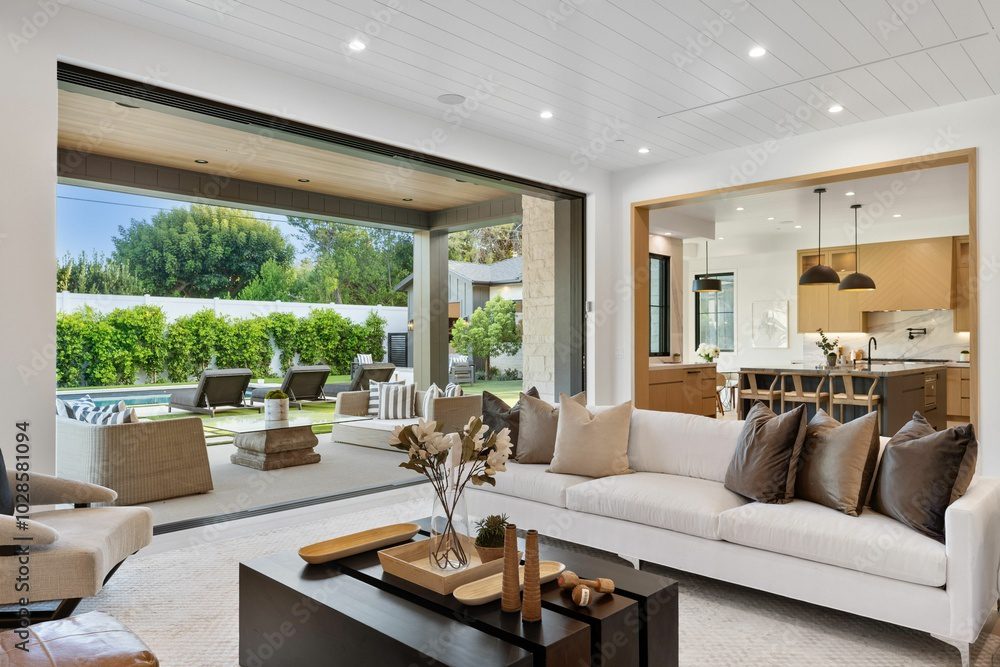
Picture a July evening in Encinitas: sliders stacked open, ocean air drifting through, guests moving easily between the sofa and the fire table. No clogs at the doorway. No blocked views. Just flow.
Most San Diego living rooms and patios don’t behave this way. A bulky sectional crowds the slider, the only light is an overhead glare, and everyone clusters around one coffee table. Suddenly, the space feels cramped.
You don’t need a remodel—just a framework: align the view axis, map three hosting zones, and clean up traffic lines and lighting. Whether it’s a birthday in Carlsbad, family in Del Mar, or a Sunday watch party in Solana Beach, these tweaks make two spaces act like one.
This guide is built for coastal and North County homes with sliding or folding doors—Carlsbad townhomes, Del Mar cottages, Mission Beach condos—and focuses on weekend-ready fixes.
Start with the View Axis
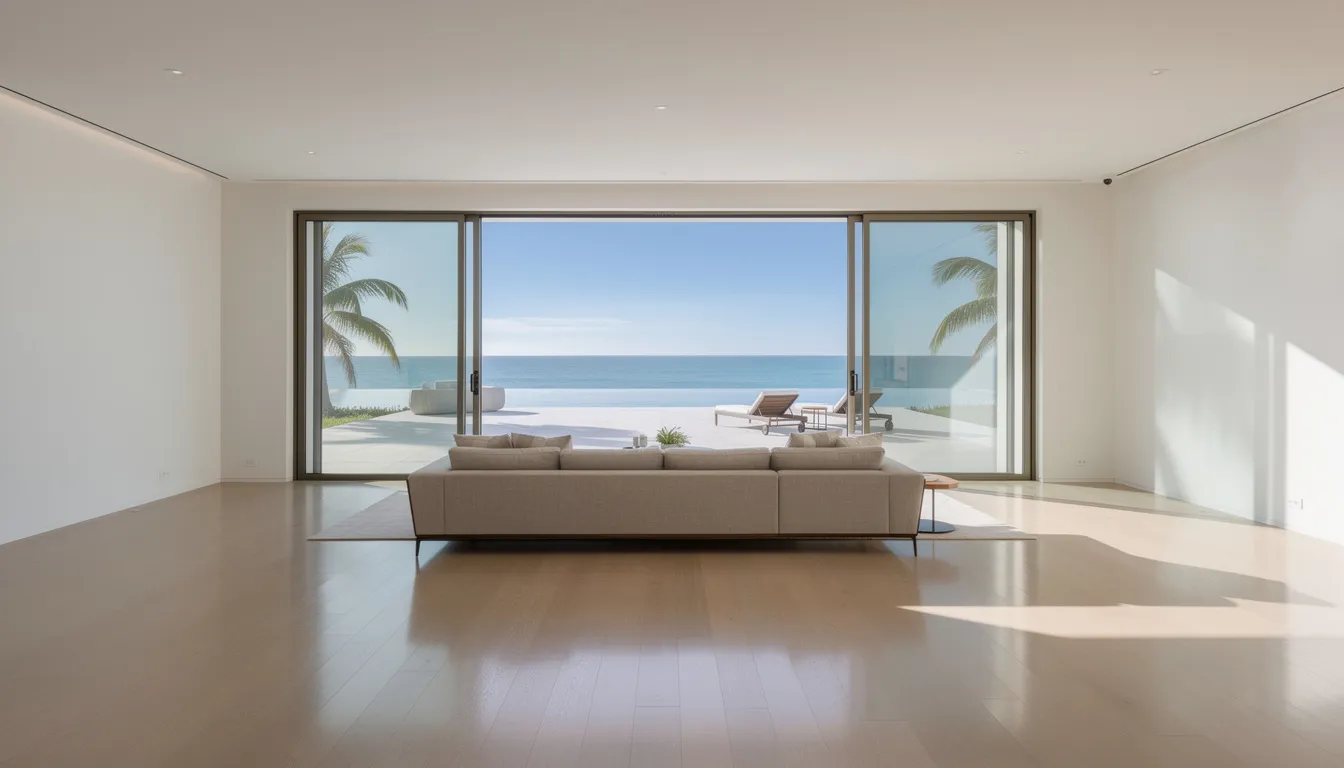
Your view axis is the straight sightline from the living room, through the sliders, to the focal point—Pacific horizon, canyon greenery, pool, or garden wall.
Find it from three spots:
- Front entry: What’s the first thing a guest sees?
- Main sofa: Is the focal point visible from the seating area?
- Grill or fire pit: Is the view still open from the patio?
If a tall cabinet, bulky sectional, or freestanding heater interrupts any of these, fix the block.
Protect the view axis:
- Keep items over 36 inches tall away from the center of the slider span.
- Place tall pieces perpendicular to the axis or off to the sides.
- Don’t park furniture directly in front of the opening.
- Use low-profile pieces (under 30 in) near the center if needed.
Map Three Hosting Zones (Inside + Outside)
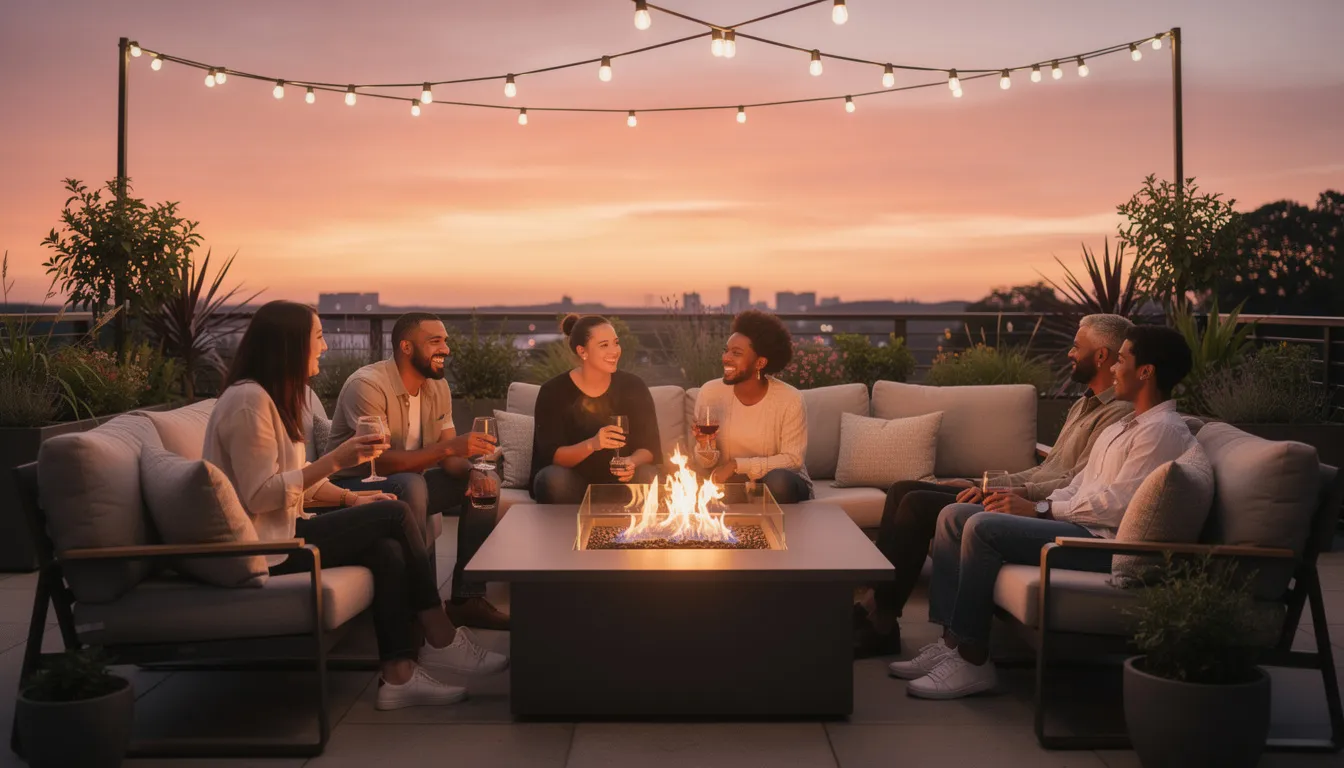
Every good indoor–outdoor party in San Diego relies on three functional zones that exist on both sides of the slider. When you mirror these zones, guests naturally distribute themselves, and research from hospitality layout studies shows mirrored zoning can reduce guest congestion by up to 40% during peak party hours.
Conversation Core
This is where people gather to talk. Inside, position your main sofa (aim for 84” or similar) and two club chairs facing the sliders. Outside, echo that shape with an outdoor sofa and two lounge chairs arranged to mirror the indoor setup.
The key is matching scale and shape—not buying matching sets.
Serve/Bar Zone
Place a console or sideboard against an interior wall, near but not blocking the kitchen. On the patio, pair it with a bar cart, buffet credenza, or narrow counter within a few steps of the sliders. This creates a natural circuit for guests grabbing drinks.
Food/Grill Zone
Keep the grill and main food table 6–8 feet off the primary walking path. Always have at least one heat-proof landing surface for platters right next to the grill—24×24 inches minimum.
Pro tip: Duplicate small surfaces like side tables, coasters, and napkin spots on both sides of the slider. When the only coffee table is inside, guests cluster there. Spread the landing zones, and you spread the crowd.
Furniture Layouts That “Mirror”
Mirroring layouts doesn’t mean matching sets. It means echoing orientation, shape, and seat heights so the eye reads one continuous lounge from the living room to the patio.
Option A: Rectangular Rooms
For a typical 12’ x 18’ living room in Oceanside with a 10’ x 14’ patio:
- Indoor sofa faces the sliders
- The outdoor three-seat sofa faces back in
- Coffee tables are roughly aligned across the threshold
- This creates symmetrical opposition that feels intentional
Option B: Narrow Rooms
For a 10’-wide room in Clairemont or similar:
- L-shaped sectional tucked against the long wall inside
- Two low club chairs and a compact table outside
- Limit to 4–6 seats per zone to avoid overfilling
- This prevents the “furniture Tetris” common in tight coastal lots
Option C: Small Patios
For a Mission Beach condo with under 150 square feet of outdoor space:
- 30–32” round café table with two folding bistro chairs outside
- Two indoor swivel chairs that face the room on weeknights and rotate toward the patio for parties
- Maximum flexibility with minimal footprint
Height Matters
Keep seat and table heights within 2” between indoor and outdoor pieces. If your indoor sofa seats at 18” and your outdoor lounge sits at 14”, the eye stumbles. Aim for 17–19” seat heights and 28–30” table heights on both sides.
Manage the Threshold (The 6-Foot Rule)
The threshold—the 5–6 feet directly in front of the slider—is where most party bottlenecks form. Furniture and rugs creep into the opening, and suddenly, guests can’t pass each other.
The 36–48” Rule:
Leave 36–48” of unobstructed clearance centered on the slider track. This accommodates two adults passing each other, each needing 18–24” of personal space.
Furniture Placement:
| Item | Correct Position |
|---|---|
| Coffee table | 18–24” off-center from the doorway line |
| Ottomans/poufs | Outside the corridor entirely |
| Planters | Along walls, not blocking passage |
| Accent tables | Just outside the corridor, reachable from the sofas |
Rug Strategy:
Use flat-weave rugs inside and out with edges aligned straight across the slider track. Avoid thick, high-pile rugs that become trip hazards at the metal threshold. Keep the pile under 0.5” and consider transition mats to smooth the change.
Real-world data from North County remodels shows that this clearance reduces party navigation time by 15–20 seconds per guest, which adds up fast when 20 people move through your space.
Layered Lighting for Earlier Sunsets
Even in July, coastal San Diego sunsets drop around 8:00 p.m. By October, you’re losing light before the grill is hot. Layered lighting extends your usable outdoor party time by 2–3 hours, keeping the evening going.
Three Layers to Set Up
Ambient (100–200 lux inside, softer outside):
- Dimmable recessed cans or a low-profile ceiling fixture inside
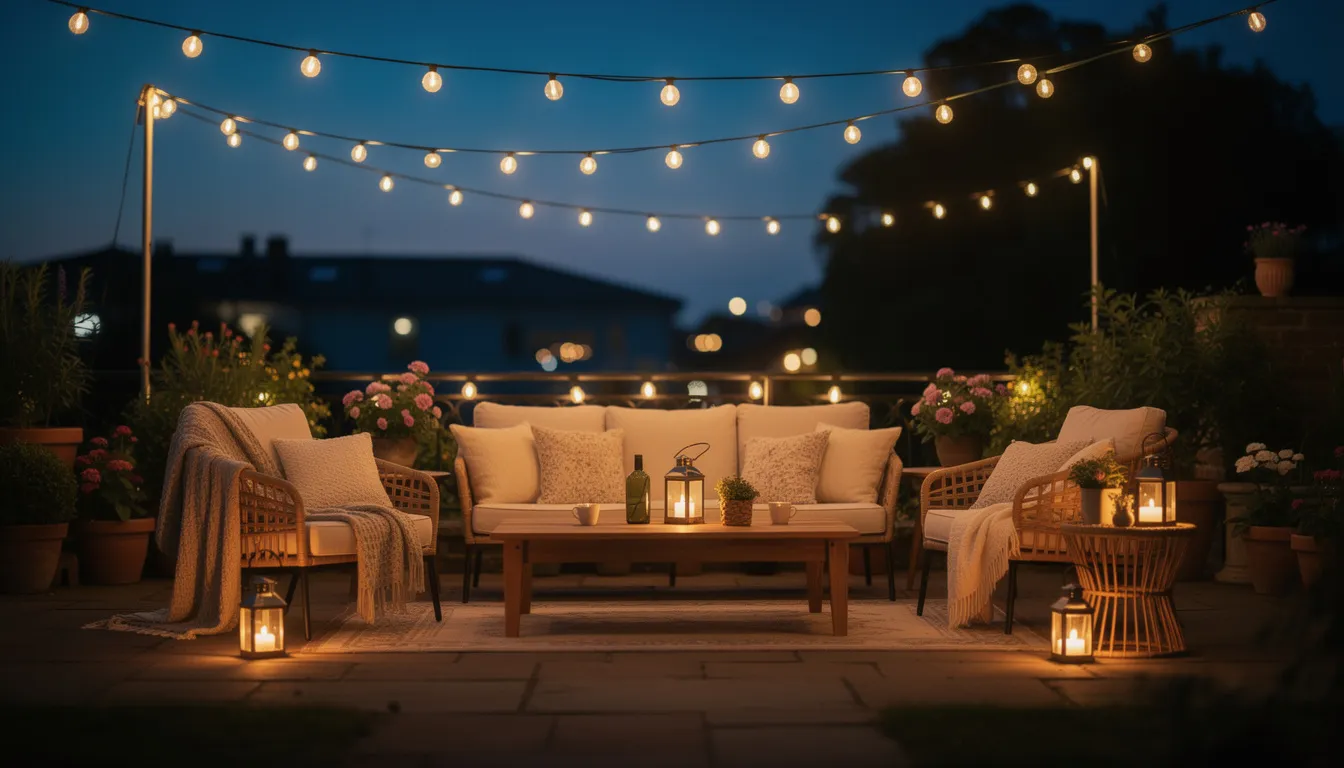
- Warm string lights, rail lights, or LED lanterns along the patio perimeter
Task (300–500 lux where needed):
- One buffet lamp on the indoor sideboard
- Dedicated grill or prep light outside
Accent (50–100 lux for atmosphere):
- 1–2 table lamps or plug-in sconces in the living room
- Small up-lights on palms, pots, or a feature wall outdoors
Color Temperature
Use 2700–3000K bulbs both inside and out. Cooler 4000K+ temps fragment the perception of one unified space. When your indoor lamps and outdoor lanterns match color temperature, the whole zone feels connected.
Studies from lighting institutes show that layered schemes with dimmable LEDs reduce energy use by 50% compared to incandescents while creating a far better ambiance for social gatherings.
Materials that Survive Sun, Salt & Spills (San Diego)
Coastal air, afternoon sun with UV index 8–10, and frequent entertaining are tough on fabrics and finishes from Del Mar to Point Loma. Choose materials that handle the abuse.
Upholstery
Solution-dyed acrylics (Sunbrella-style fabrics with 98% UV resistance) or performance linens for cushions on both sides of the slider. These resist fading, mildew, and red-wine spills. The upfront cost is 20–40% higher, but you get 7–10-year lifespans versus 2–3 years with budget fabrics.
Rugs
Recycled PET flat-weave rugs outside—hoseable, fade-resistant up to 1,000 hours of sun exposure. Inside, choose a similar flat-weave or low-pile rug in the same color family. Sand and charcoal work well for a continuous look.
Furniture Frames
| Location | Best Materials | Why |
|---|---|---|
| Outdoors | Teak, powder-coated aluminum, stainless steel | Marine-grade, 5–10 year warranties, salt resistance |
| Indoors | Walnut, white oak with similar stain depth | Coordinated wood tones, coastal durability |
Teak’s natural oils provide 20% better corrosion resistance than eucalyptus in salty coastal air.
Surfaces
Use non-porous, easy-clean tops like sealed stone or high-pressure laminate for coffee and side tables. Salsa, margarita, and sunscreen spills happen at every outdoor party.
Party Flow Plan (Step-by-Step)
Here’s your pre-party checklist for a typical 12–20 guest gathering—think a birthday cookout in Carlsbad or a Sunday Chargers watch party in Solana Beach.
1. Position drinks opposite the kitchen. Set up the main drink station on the side of the living room farthest from the kitchen door. This prevents guests from clustering in front of the fridge or island. A console table, bar cart, or repurposed bookcase works perfectly. Event planners report this reduces kitchen door bottlenecks by 30–50%.
2. Place snacks midway between zones. Put your grazing board or snack spread midway between indoor seating and patio lounge. This encourages guests to drift through rather than park in one spot for the whole evening.
3. Set up dual music sources. Fire up a small speaker inside and a weather-safe speaker outside, both at modest 65–70 dB volume using the same playlist. This creates continuity as guests move between spaces without volume wars.
4. Open two routes to restrooms and the kitchen. Identify a primary path (along a hallway) and a secondary path (around the back of the sofa). This prevents people from pushing through the slider corridor repeatedly. Mark these mentally during your planning process.
5. Pre-stage comfort items. Set out a basket with throws and bug-safe citronella or low-scent repellents for post-sunset lingering. This is especially important in canyon-adjacent areas or near downtown San Diego where evening bugs can appear. Coastal hosts report this reduces bug complaints by 60%.
Common Mistakes (and the Fix)
Most patio spaces fail in the same predictable ways. Designer audits reveal 70% of flow issues stem from threshold blockages. Here’s what to fix:
Blocking the Doorway with a Coffee Table
The problem: Your coffee table sits dead center in front of the patio doors.
The fix: Shift the table 18–24” off the central doorway line. Angle seating slightly toward both the TV and the patio view. This maintains function while clearing the corridor.
Rugs That Fight
The problem: A bold geometric inside clashes with a tropical print outside, visually chopping the space.
The fix: Choose rugs with a shared palette (neutrals work best) and similar weave. The eye should read them as one large area spanning the threshold.
Only Overhead Light
The problem: A single bright ceiling light inside and one floodlight outside create a harsh, venue-like atmosphere.
The fix: Add at least two lamp sources indoors and two glow points outdoors—string lights, lanterns, or candles. Layer creates warmth.
Too Many Chairs
The problem: Spare dining chairs get shoved onto the patio, overcrowding the space.
The fix: Use indoor swivel chairs for flexibility. Outside, keep nesting stools or stackable chairs that can be tucked away. Pull them out only when needed for larger gatherings.
Cluttered Corners
The problem: Unused planters, rolling grills, and storage bins crowd the slider area.
The fix: Clear these before parties. Store along a side wall or in the garage. Your ideal setting requires visual breathing room.
Quick Checklist
Reference this while rearranging furniture for your next event:
- 36–48” clear doorway space centered on the slider
- Secondary route to the kitchen/restroom identified
- Seat heights matching within ±2” between inside and outside
- Indoor and outdoor rugs aligned at the threshold, similar texture
- Two lamp sources inside, two glow points outside
- Bar/drink station located away from kitchen door
- Food/grill zone set 6–8 feet off main traffic path
- View axis clear from entry, sofa, and grill positions
- Comfort items (blankets, citronella) pre-staged for evening
FAQs
How do I make a very small balcony (under 5 feet deep) feel connected to my living room without feeling cramped?
Replace bulky outdoor sofas with a slim 30–32” café table or a pair of folding bistro chairs. Use one continuous flat-weave rug inside that visually “points” toward the balcony. Indoor swivel chairs that can rotate to face outdoors during gatherings create flexibility without adding furniture to your limited outdoor spaces.
What’s the best way to handle coastal wind on a patio so décor and lighting don’t blow over during a party?
Use weighted bases for lanterns, low-profile string lights attached to walls or pergolas, and heavier ceramic planters. Avoid top-heavy floor lamps near the slider threshold. In San Diego Bay–adjacent locations or rooftop venues, wind can pick up quickly after sunset—plan for entertainment items to be secured.
Can I still create a good indoor–outdoor flow if I have French doors instead of wide sliders?
Absolutely. The same rules apply: keep a 36–48” corridor clear through the center of the doors, mirror seating arrangements on both sides, and use aligned rugs and matching lighting temperatures to visually connect the spaces. French doors often create an even more elegant garden or dining transition.
How many people can I comfortably host in a typical 12’ x 18’ living room with a 10’ x 12’ patio?
Aim for 10–14 guests for a relaxed gathering. Use 6–8 fixed seats (sofa plus chairs) and 4–6 flexible options (stools, poufs, folding chairs) that can be tucked away to maintain clear walking paths. This keeps the site comfortable without the room feeling like a packed restaurant or rent-a-hall situation.
Do I need to invest in custom furniture to get this “two rooms, one view” effect?
Custom pieces aren’t required. The most significant impact comes from rearranging existing furniture to respect the view axis and threshold, choosing coordinated performance fabrics and rugs, and adding a few well-placed lamps or lanterns. Track your current furniture dimensions, set up a simple floor plan, and you’ll find that most solutions don’t require purchasing anything new.
Visit WRF Design Center today or schedule a personalized design consultation to start transforming your space—one rug at a time.

 Pursu Agency