Key Points
- Solution-dyed acrylic, including Sunbrella, is a top choice for uncovered outdoor spaces because of its strong fade resistance, cleanability, and soft feel.
- Polyolefin and polypropylene are durable, moisture-resistant options that work especially well for covered patios, poolside areas, rugs, and high-use spaces.
- The best outdoor fabric depends on sun exposure, moisture, durability needs, cleaning requirements, and how the space will actually be used.
Understanding Outdoor Fabric and Why it Behaves so Well!
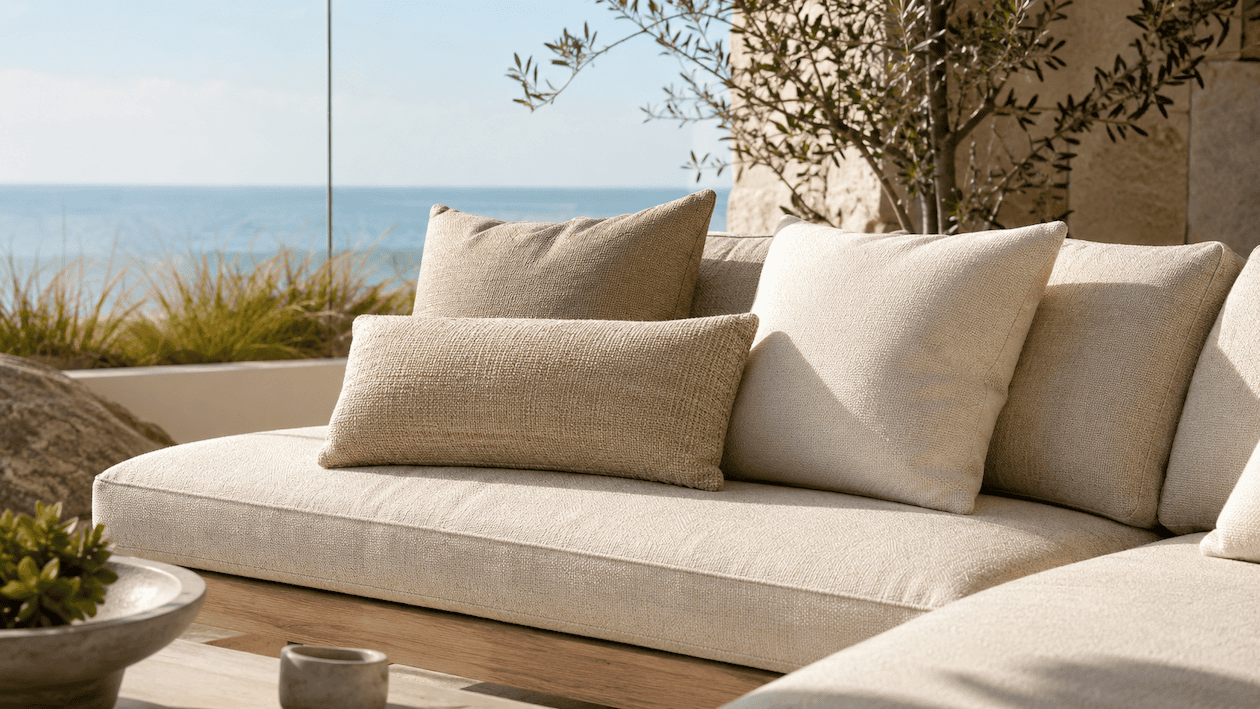
Outdoor fabrics have come a long way from the hard, crackly stiff material that initially comes to mind. They have really started weaving some soft, sophisticated, and beautiful weaves that we are now seeing them being used more and more for indoor spaces. In the store we often refer to them as kid-proof, dog-proof, and husband-proof. It does not mean they won’t get dirty but it does mean they will clean well, they won’t fade, and they won’t pill or wear out like other fabrics.
But, not all outdoor fabrics are created equal. We carry many different materials such as solution-dyed acrylic, polyolefin, polypropylene, and recycled polyester and some are better than others. For a broader look at performance fabrics for sun, sand, and salt, our patio-proof upholstery guide explains what matters most in coastal Southern California.
Let’s go through each type.
100% Solution-Dyed Acrylic aka Sunbrella
Best for: Outdoor uncovered patios, high use furniture, and high sun areas
Solution-dyed acrylic is one of the most popular choices for high-quality outdoor upholstery. This is generally what Sunbrella fabrics are made out of, although Sunbrella is a marketing term and we carry other brands of fabric from this material. When we say solution-dyed acrylic we are specifying that the entire fiber is dyed and not just the surface. This is the same acrylic used for nails when women get their acrylic nails done.
Instead of applying a coat of color to the top of the material, we are dyeing the entire material which is why this fabric does not fade. Sunbrella and other brands of fabric have tests in place to see how many light hours it can go through which is why they have either a 5 or 6 year warranty on their brands.
Also, because it is an acrylic fiber.. it does not like to absorb so when it gets messy with dirt, sunscreen, food, or drinks.. the fiber doesn’t even want to hold onto it. It does not absorb because it can’t so it is easy to clean, washable and in most cases, bleach cleanable.
Weaves are so sophisticated now that you can even buy a soft and fuzzy sunbrella chenille that no one will believe is an outdoor fabric. Go ahead and put it inside in your kitchen, window seat, or children’s playroom. It’ll last and look good the whole time it’s there.
We use it for upholstery, pillows, custom outdoor cushions and furniture, tents, outdoor curtains, and we even have one client who comes in for scraps to make an outdoor quilt!
Why we love it
- Excellent UV and fade resistance (5-6 year warrenty)
- Soft, comfortable hand that works beautifully for upholstery
- Available in a huge range of colors, patterns, and textures
- Generally resistant to mildew, stains, and water when properly maintained
- Suitable for both indoor and outdoor applications
- Premium appearance that can closely resemble traditional interior textiles
Always check the manufacturer’s specifications for UV resistance, water repellency, abrasion ratings, cleaning instructions, and warranties.
 Polyolefin
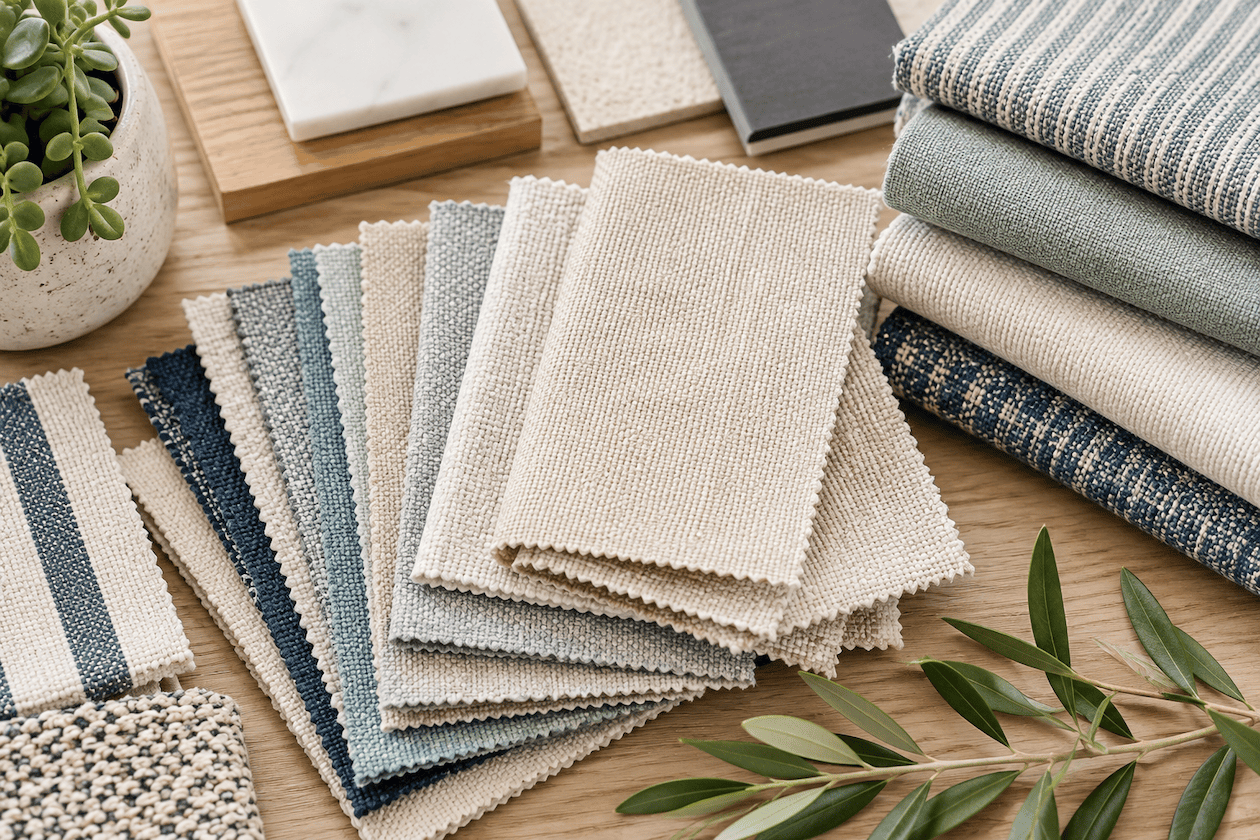 Polyolefin
Best for: Durable, outdoor covered patios, and indoor family friendly furniture
Polyolefin is a family of synthetic fibers known for being lightweight, durable, and highly resistant to moisture. I recommend bringing these in during a rainy season. These fabrics are easier to weave so we tend to see more patterns and colors as an option for a fun patio. It is resistant to moisture and typically tested for at least 1600 UV light hours before fading. Our polyolefin fabrics typically have a 3 year manufacturers warranty behind them.
That low moisture absorption makes polyolefin particularly useful around pools, patios, and other places where fabrics may regularly get wet. I also love this fabric for indoor use or covered patios because it’ll last longer out of the rain and elements. They perform beautifully inside as well and with their fun patterns we often see them in family rooms or kitchens. It is a more accessible price point because it is an easier weave so it is less labor intensive to make.
Why we love it
- Very low moisture absorption
- Good resistance to stains and mildew
- Durable for everyday use
- Lightweight
- Often offers strong performance at an approachable price point
- Can be produced in a wide variety of textures and styles
Modern polyolefin fabrics can feel surprisingly soft and sophisticated, making them suitable for much more than utilitarian outdoor furniture.
Depending on how the fabric is manufactured and colored, UV and fade performance can vary. For areas receiving intense direct sunlight, look specifically for fabrics with strong UV ratings which is on the label of all of our polyolefin fabric samples in store.
Polypropylene
Best for: Moisture-prone spaces, outdoor rugs, upholstery, and hardworking applications
Here’s where fabric terminology gets a little tricky: polypropylene is actually a type of polyolefin.
I typically see this fabric in fun weaves like the polyolefin, but it is usually in outdoor rugs or a lounge chairs right next to a pool where you it while you’re still wet. It is usually thicker and stiffer which is great for when you are sweeping or hosing off your patio because you don’t have to smooth it out afterwards. I see it in a lot of workshops as well and gardening areas where you are working a little harder in the space and therefore harder on your materials.
Because this weave is much less labor intensive than the other options, we typically see it at a much easier price point in term of accessibility.
“Polyolefin” refers to a broader family of polymers, while polypropylene is one specific member of that family. In the textile industry, however, you may see both terms used on fabric specifications and product descriptions.
Polypropylene is naturally hydrophobic, meaning it absorbs very little moisture. That makes it a practical option for outdoor environments and areas where quick drying is important.
Why we love it
- Extremely low moisture absorption
- Naturally resistant to many stains
- Very durable
- Resistant to mildew because the fiber itself does not readily absorb water
- Frequently used for outdoor rugs as well as upholstery fabrics
- Often an economical performance-fabric option
Polypropylene can be a great workhorse material, particularly where moisture resistance and durability are priorities.
Recycled Polyester
Best for: Versatile performance applications and projects prioritizing recycled content
Recycled polyester offers another option for performance and outdoor textiles. Instead of relying entirely on virgin polyester, manufacturers can create polyester fiber using recycled materials, commonly including post-consumer plastic bottles and other polyester waste.
Depending on where they are recycling the polyester from, it can be more or less durable. Always ask what the manufacturer recommends with this newer material.
The resulting fibers can then be woven into fabrics that offer the durability and versatility associated with polyester while incorporating recycled content.
Why designers love it
- Makes use of recycled material
- Durable and versatile
- Can offer excellent abrasion resistance
- Available in a wide variety of colors, patterns, and textures
- Can be engineered for indoor/outdoor performance
- Offers an option for projects where recycled content is an important consideration
For outdoor use, look for recycled polyester fabrics specifically engineered and tested for outdoor performance. This is a relatively new weave on the market and I would say that it performs similarly to polyolefin. It does have to be a certain type of tested fiber for outdoor. While I do not recommend this for uncovered patios and keeping out in the elements, it can be great for options where you only need to bring your outdoor cushions or pillows temporarily. It is more of an environmental approach to closing the loop in the textile world so we produce less waste.
I do like this for indoor use where you have high traffic, or high UV areas especially a sunroom. The more we use recycled fabrics, the more the industry will work on getting them at a higher and higher rating.
So, Which Outdoor Fabric Is Best?
There isn’t one material that is automatically best for every project. Because the best is just the fabric that you like the most and want to see the most.
Custom projects mean you have all the options and so do we.
For luxury outdoor cushions and upholstery with significant sun exposure, 100% solution-dyed acrylic is often an excellent choice because of its combination of softness, versatility, fade resistance, and outdoor performance.
For high-use areas where moisture and stains are major concerns, polyolefin and polypropylene can offer the best in terms of durability and practicality. I love both for covered patios and indoor applications.
For projects where recycled content is a priority, outdoor-rated recycled polyester can provide an attractive combination of performance and material reuse. The more we use these the better they will get!
Ultimately, the fiber content is only part of the story. When selecting an outdoor fabric, also consider:
- UV and fade-resistance ratings
- Abrasion or durability ratings
- Water and stain resistance
- Mildew resistance
- Cleaning requirements
- Fabric construction
- Manufacturer warranties
- How much direct sun and weather exposure the furniture will receive
Choosing the Right Outdoor Fabric
Outdoor fabric technology gives us more choices than ever. 100% solution-dyed acrylic (Sunbrella and other brands) are absolutely the best in colorfastness , cleanability, and premium upholstery applications. Polyolefin offers excellent moisture resistance and everyday durability and are fantastic for pattern, color, indoor and covered use. Polypropylene, a member of the polyolefin family, is a hardworking option for moisture-prone applications like rugs and workrooms. And recycled polyester brings recycled content into a performance-fabric category.
The best choice isn’t simply about picking a fiber it’s about what you love the most.
Each material can bring a different look and you can always mix and match fibers. Maybe your cushions are Sunbrella but your pillows are polyolefin… Why? Because it is much easier to bring a pillow into a covered area than a sofa cushion.
Maybe you have three toddlers and you look at your family room and want something that will hide all of the family’s sins with a quick wipe and vacuum. Maybe your boat needs curtains and you need the most durable of all the fabrics.
Whatever it is, we have heard similar stories for over 30 years and our team of designers are all prepared to lead you in the right direction to get the fabric you want and make sure it can last the way you want.
Frequently Asked Questions
What is the best fabric for outdoor furniture?
For furniture exposed to significant sun and weather, solution-dyed acrylic is often one of the best choices because of its fade resistance, cleanability, and durability.
Is Sunbrella the same as solution-dyed acrylic?
Sunbrella is a well-known brand that commonly uses solution-dyed acrylic fibers. Other manufacturers also produce solution-dyed acrylic outdoor fabrics with similar performance characteristics.
What is the difference between polyolefin and polypropylene?
Polyolefin is a broader family of synthetic fibers, while polypropylene is one specific type of polyolefin. Both are known for low moisture absorption and strong durability.
Can outdoor fabric be used indoors?
Yes. Many modern outdoor fabrics are soft and sophisticated enough for indoor upholstery, window seats, kitchens, family rooms, and other high-use spaces where durability and easy cleaning are important.

 Pursu Agency