Key Points
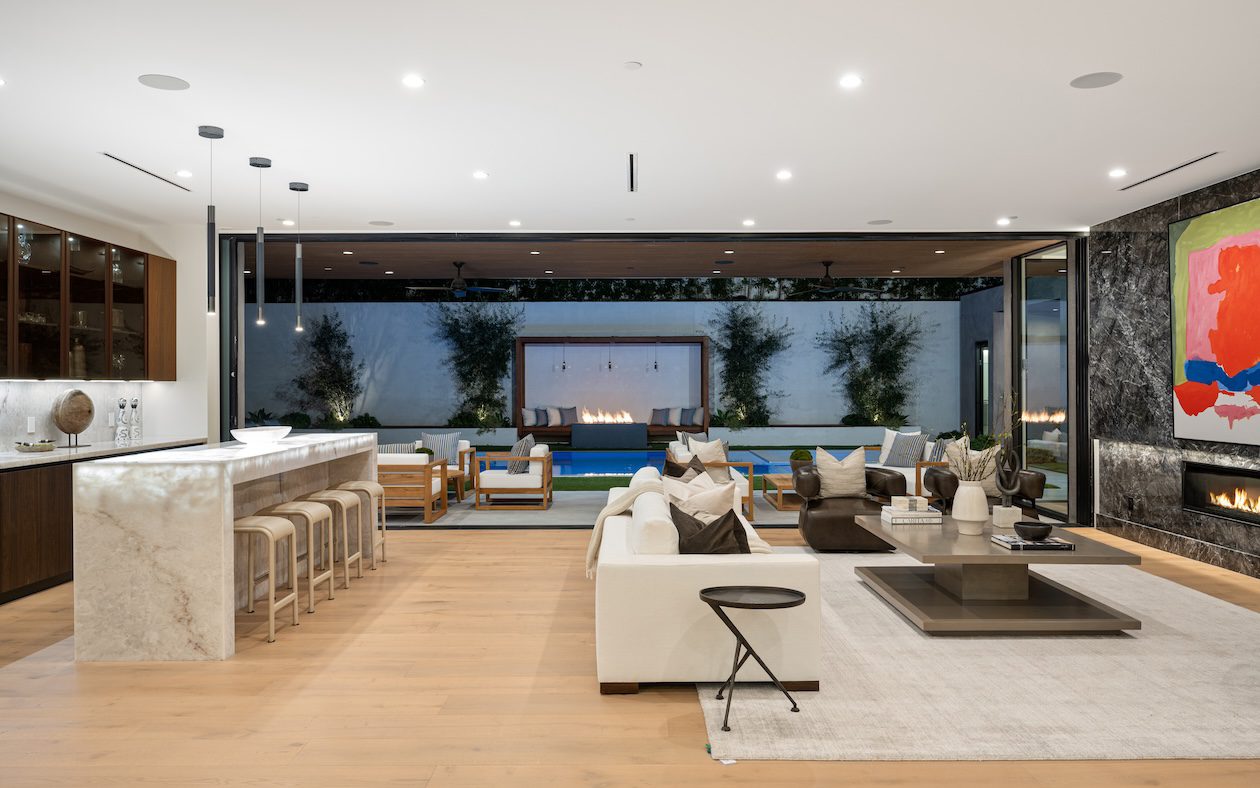
- An expensive-looking coastal home relies more on scale, proportion, and material quality than formal décor.
- Layered neutrals, natural materials, and thoughtful contrast create relaxed luxury without feeling overly designed.
- Custom details and repetition help make the entire home feel intentional and cohesive.
A luxurious coastal home does not need crystal chandeliers, ornate furniture, or rooms that feel too precious for everyday life. In Southern California, some of the most sophisticated interiors are also the most relaxed.
That balance is part of what makes California coastal design so appealing. Natural materials, comfortable furnishings, abundant light, and a strong connection to the outdoors create homes that feel elevated without becoming formal.
But relaxed does not mean accidental.
The difference between a room that simply contains beautiful things and one that feels professionally designed often comes down to decisions that are easy to overlook. Scale, proportion, material quality, contrast, lighting, and repetition can have a greater effect on a room than the price of any individual piece.
Understanding how designers make those decisions can help create a coastal home that feels refined, comfortable, and cohesive without losing the effortless quality that makes this style so livable.
What Makes A Coastal Home Feel Luxurious?
Luxury Is Not The Same As Formality
Traditional ideas of luxury often emphasize formality. Symmetrical furniture arrangements, ornate details, delicate materials, and decorative finishes can certainly create beautiful interiors, but they are not the only way to make a home feel sophisticated.
Coastal luxury tends to take a quieter approach.
Instead of relying on decoration to communicate quality, California coastal interiors often emphasize beautiful materials, generous proportions, comfortable upholstery, and thoughtful details. A substantial linen sofa, carefully fitted window treatments, or beautifully grained wood can feel luxurious without making a room feel formal.
This approach is particularly well suited to Southern California homes, where living spaces often need to transition easily between indoor and outdoor activities.
The Most Elevated Rooms Feel Intentional
An expensive piece of furniture cannot compensate for a room that feels poorly proportioned or disconnected.
Designers look at the entire environment. They consider how furniture relates to the architecture, whether materials repeat naturally throughout the home, how one room appears from another, and whether every element contributes to a consistent visual language.
The goal is not necessarily to make individual pieces stand out. It is to make the room as a whole feel considered.
That sense of intention is one of the strongest signals of luxury.
Start With Scale And Proportion
Furniture Should Relate To The Architecture
Many Southern California homes feature large windows, sliding glass doors, open floor plans, and connections to patios and outdoor living areas. Furniture needs enough presence to hold its own within that architecture.
A large living room, for example, may require a deeper sofa, substantial lounge chairs, a generously sized coffee table, or a larger rug to visually anchor the seating area.
Designers also consider the relationships between those pieces. The size of a coffee table should make sense relative to the sofa. Chairs should not feel miniature beside a large sectional. A rug should help define the furniture arrangement rather than appear to float underneath its center.
These relationships can be subtle, but they strongly influence how polished a room feels.
Undersized Pieces Can Make Even Expensive Rooms Feel Less Polished
One common mistake is assuming that smaller furniture will make a room feel larger. In a spacious room, too many small pieces can actually have the opposite effect.
They create visual fragmentation.
Rather than filling a large room with numerous small furnishings and accessories, designers often use fewer pieces with greater visual weight. A substantial sectional, oversized artwork, broad coffee table, or pair of appropriately scaled chairs can establish the room without making it feel crowded.
The key is balancing scale with open space. Furniture should feel substantial enough for the architecture while still allowing the room to breathe.
Use Fewer Materials, But Choose Them Carefully
Material Quality Is More Noticeable Than Quantity
Sophisticated coastal design is often relatively restrained in its material palette.
Instead of introducing a different finish on every surface, designers may rely on a carefully selected combination of natural stone, wood, linen, woven fibers, quality upholstery, and complementary metals.
Light woods such as white oak can complement coastal interiors, while walnut and darker stains can introduce warmth and contrast. Stone brings natural variation, and woven materials add texture without requiring bold color or pattern.
The materials do not necessarily need to be flashy. In fact, some of the most effective choices are quiet ones that become more beautiful when viewed up close.
Repetition Makes A Home Feel Intentionally Designed
Choosing good materials is only part of the equation. Repeating them is what begins to create cohesion.
A wood tone introduced in the kitchen might appear again on living room furniture or cabinetry. A metal finish used on lighting may reappear subtly in hardware. A stone or textile color can influence upholstery and accessories elsewhere in the home.
This does not mean every room needs identical finishes.
Instead, repetition establishes relationships between spaces. When the same materials, colors, and textures appear in different forms throughout the home, rooms begin to feel like parts of one larger design rather than separate decorating projects.
Add Contrast To Light Coastal Interiors
All-White Rooms Can Lose Dimension
White and cream are natural choices for bright coastal homes, but a room composed entirely of similar light values can quickly lose definition.
Without contrast, furniture, walls, textiles, and architectural details can visually blend together.
Designers use contrast to give neutral rooms structure. That might mean placing a warm wood table against pale upholstery, using a darker metal light fixture in a bright room, or adding deeper neutral pillows to a cream sofa.
The contrast does not have to be dramatic. Even small differences in value can create enough definition to make the surrounding lighter materials feel more intentional.
Dark Woods Can Make Coastal Design Feel More Sophisticated
Dark finishes are sometimes avoided in coastal interiors because homeowners worry they will make the space feel heavy.
Used selectively, they can do the opposite.
Walnut, medium-to-dark wood stains, matte black accents, and other grounded finishes can give a pale room an important visual anchor. They also prevent coastal design from becoming overly beachy or predictable.
The key is restraint.
A dark coffee table, wood console, pair of chairs, or contrasting architectural detail may be enough to give the room depth while allowing light walls, natural textures, and large windows to remain dominant.
Layer Neutrals Instead Of Relying On Color
Sophisticated Neutral Rooms Contain Multiple Tones
A neutral palette does not mean choosing one shade of beige and repeating it everywhere.
Designers build depth by layering related neutral tones such as warm white, cream, oatmeal, sand, taupe, camel, and muted earth colors. Neutral palettes can also allow materials and textures to take center stage, adding interest without relying on bold color.
Undertones matter as well. Warm neutrals generally work together more naturally when they share similar undertones, while intentionally introducing a contrasting undertone requires greater care.
Rather than asking whether everything matches, consider whether the colors relate to one another.
Texture Keeps Restrained Palettes Interesting
When color is limited, texture becomes much more important.
A nubby upholstery fabric reflects light differently than smooth linen. A woven rug creates a different visual surface than stone flooring. Drapery introduces softness against hard windows, while pillows can add layers of weave, pattern, and dimension.
This is why rugs, upholstery, pillows, window treatments, baskets, and other tactile materials are especially important in California casual interiors.
They allow a room to remain visually quiet without becoming visually empty.
Treat Window Treatments As Part Of The Architecture
Bare Windows Can Make A Room Feel Less Resolved
Large windows and sliders are often among the best architectural features of a coastal home, so leaving them completely uncovered can seem like the obvious choice.
But window treatments do more than provide privacy or control light.
Drapery can visually extend the height of a room, soften large expanses of glass, and provide weight around windows. Shades introduce another layer of texture and can make a window feel more integrated with the rest of the interior.
When window treatments are considered early in the design process, they become part of the architecture rather than an accessory added at the end.
Custom Proportions Create A More Tailored Result
The difference between generic and polished window treatments frequently comes down to proportion.
Designers consider mounting height, panel width, fullness, fabric weight, and finished length in relation to the actual window and room. Large sliders may require a completely different approach than a smaller bedroom window.
Fabric matters too. A relaxed linen or linen-like material can provide softness and movement without introducing the formality associated with heavier traditional drapery.
These seemingly small decisions can make the entire room appear more finished.
Lighting Changes How Expensive A Room Feels
One Overhead Fixture Is Rarely Enough
Lighting is most successful when it comes from multiple sources.
Ambient lighting provides overall illumination. Task lighting supports specific activities such as reading or cooking. Accent lighting can highlight artwork, architectural features, or interesting materials.
In a living room, that might mean combining recessed or ceiling lighting with table lamps, floor lamps, and decorative fixtures rather than expecting one central fixture to do everything.
Multiple sources also allow the atmosphere of the room to change throughout the day.
Good Lighting Makes Materials Look Better
Material selection and lighting are closely connected.
Directional or accent lighting can reveal the texture of stone, emphasize wood grain, or bring dimension to upholstery and woven fabrics. Softer light can create warmth in a neutral room that might otherwise appear stark.
Natural light should be considered as well. A material that looks beautiful in a showroom may appear quite different beside a large west-facing window.
Designers evaluate finishes and fabrics in the environment where they will actually be used whenever possible.
 Custom Details Make A Room Feel Intentional
Custom Does Not Need To Mean Ornate
Customization is sometimes associated with elaborate traditional interiors, but it can be just as valuable in a relaxed coastal home.
Custom upholstery can provide the right dimensions for an unusual room. Custom cushions can fit a built-in seating area precisely. Pillows can introduce the exact texture or proportion needed to balance a sofa. Window treatments can be designed around unusually large windows or sliders.
None of these details needs to call attention to itself.
Their value often comes from how naturally they fit the room.
Small Proportional Differences Have A Large Visual Impact
A pillow that is slightly too small, a cushion that does not fit its frame correctly, or drapery that ends at an awkward height can affect how finished a space feels.
Designers pay attention to these details because the eye notices proportion even when the viewer cannot identify exactly what feels wrong.
The same principle applies to furniture dimensions. An extra few inches of depth, height, or width can change how one piece relates to everything around it.
Customization provides the ability to solve those relationships rather than forcing the room to accommodate standard dimensions.
Leave Enough Visual Breathing Room
Luxury Interiors Rarely Feel Overcrowded
More furniture does not necessarily create a more complete room.
In fact, knowing what to leave out is an important part of interior design.
Negative space gives significant pieces room to register visually. It creates clearer sightlines, improves circulation, and allows materials and architectural features to receive more attention.
Rather than filling every empty corner, designers consider whether adding something actually improves the composition.
Sometimes the most effective choice is leaving the space alone.
Coastal Minimalism Should Feel Warm, Not Empty
Restraint can go too far.
A room with very little furniture, minimal texture, and almost no personal detail may technically be uncluttered but still feel unfinished.
California casual design works best when simplicity is balanced with warmth. Wood, upholstery, rugs, pillows, woven materials, window treatments, and carefully selected accessories soften the architecture while preserving a sense of openness.
The objective is not emptiness. It is editing.
Design For The Indoor-Outdoor Lifestyle
Formality Does Not Fit The Way Many Southern California Homes Are Used
A beautiful coastal interior still needs to function when the patio doors are open and people are moving between the kitchen, living room, and backyard.
That means design decisions need to account for everyday life.
Families, pets, entertaining, sunlight, and regular traffic all affect which fabrics and finishes make sense. A room that looks sophisticated but requires everyone to worry constantly about damaging it is unlikely to feel relaxed.
For many homes, performance and ease of maintenance deserve consideration alongside appearance.
The Most Successful Spaces Balance Beauty With Comfort
Comfort should not be treated as a compromise.
A well-proportioned sofa can be both beautiful and genuinely comfortable. Durable upholstery can still have an elevated texture. Outdoor cushions can coordinate with the interior without looking like indoor furniture was simply moved outside.
This balance is central to relaxed luxury.
The home should feel beautiful when no one is using it and even better when people are.
How Designers Create Cohesion Across The Entire Home
Think Beyond One Room At A Time
One of the biggest differences between decorating individual rooms and developing a complete interior design is the attention paid to what happens between spaces.
This is especially important in open-concept homes.
From the kitchen, you may be able to see the dining room, living area, patio, and entry simultaneously. Those spaces do not need to match, but they should make sense together.
Designers consider those sightlines when choosing furniture, fabrics, finishes, lighting, and color.
Bedrooms and more private spaces can develop their own personalities, but repeating selected elements maintains a connection to the rest of the house.
Create A Material Language That Repeats Throughout The Home
A cohesive home typically has a recognizable material language.
Perhaps warm white walls, natural wood, textured neutral fabrics, aged or warm metal finishes, and occasional darker elements appear throughout the design. One room might emphasize wood while another uses more upholstery and stone, but the underlying vocabulary remains familiar.
This approach provides consistency without making every space identical.
It also makes future design decisions easier. Instead of asking whether an individual item is attractive, you can ask whether it belongs within the material language already established for the home.
Bring Your Coastal Home Together With WRF
Creating a coastal home that feels elevated, comfortable, and cohesive takes more than choosing beautiful pieces. Every detail, from furniture scale and fabric selection to window treatments and finishing touches, needs to work together.
WRF helps homeowners throughout Solana Beach, San Diego, and Southern California create interiors that feel thoughtfully designed for both the home and the people living in it. With interior design services, custom furniture and upholstery, custom cushions and pillows, window treatments, and an extensive selection of designer fabrics, WRF can help bring each layer of your space together.
Whether you’re furnishing a new home, refreshing an existing space, or looking for custom pieces that you simply can’t find off the shelf, WRF’s interior design services combine design expertise with personalized solutions to create a polished result without sacrificing comfort
Explore WRF’s interior design services or visit the Solana Beach showroom to start creating a coastal home that feels distinctly yours.
FAQs About Coastal Interior Design
What Makes A Coastal Interior Design Style Feel Luxurious?
Luxury coastal interior design is less about formal décor and more about thoughtful scale, quality materials, and attention to detail. Natural wood, stone, layered textiles, tailored upholstery, and custom window treatments can elevate the design style while maintaining the relaxed atmosphere associated with coastal homes.
How Can You Add Warmth To A Coastal Design Style Without Changing The Walls?
You do not need to add bold color to the walls to make a neutral coastal design style feel warmer. Designers often introduce warmth through wood tones, woven materials, rugs, linen, upholstery, pillows, and window treatments. Layering several warm neutral tones also creates depth without overwhelming a light interior.
How Do Interior Designers Keep A Coastal Home From Looking Too Beachy?
Professional interior design focuses on the home’s architecture, materials, proportions, and lifestyle rather than obvious coastal-themed décor. Using natural materials, restrained colors, sophisticated furniture, and subtle texture can create a coastal style that feels connected to Southern California without relying on nautical motifs or beach-themed accessories.

 Pursu Agency