Living along the Southern California coast offers undeniable perks. Ocean breezes, soft light, and indoor-outdoor living are part of the lifestyle. But coastal environments also come with a quieter reality. Salt air, intense sun, and persistent humidity slowly work against the materials inside and outside your home.
For homeowners who invest in custom furniture, designer finishes, and high-quality window treatments, maintenance is more than cleaning. It is about protecting craftsmanship, extending lifespan, and preserving the look you intentionally curated.
This guide shares practical, design-forward maintenance hacks to help wood, metal, and fabric elements hold up beautifully in coastal conditions, without compromising aesthetics or comfort.
The Hidden Toll of Coastal Exposure
Coastal wear does not usually show up overnight. It accumulates slowly, often going unnoticed until damage becomes costly or irreversible.
Salt Air and Metal Corrosion
Salt particles settle on metal surfaces, attracting moisture and accelerating corrosion. Even indoor pieces near open windows, patios, or sliding doors can be affected.
UV Damage to Wood and Finishes
Southern California sunlight is relentless. UV exposure breaks down finishes, fades stains, and dries out wood fibers, leading to cracking or discoloration over time.
Moisture-Related Warping and Fading
Humidity can cause wood to swell and contract, loosen joints, and dull finishes. Fabrics may fade unevenly or develop mildew if airflow is limited.
Understanding these risks is the first step toward protecting your investment.
Wood Maintenance Hacks
Wood remains a favorite for coastal homes because of its warmth and versatility. The key is choosing the right species and finishes, then maintaining them consistently.
Use the Right Finishes
Marine-grade varnishes and UV-resistant sealants are designed to flex with temperature and humidity changes. These finishes protect against salt exposure while maintaining a refined appearance, making them ideal for coastal furniture and architectural wood elements.
Choose Coastal-Friendly Woods
Certain woods naturally perform better near the ocean:
- Teak resists moisture and insects due to its natural oils
- Ipe offers exceptional density and durability
- Cedar handles humidity well and ages gracefully
These species require less intervention over time when properly sealed.
Recondition Instead of Replace
Faded or dry wood does not always need replacement. Light sanding, followed by re-oiling or resealing, can restore depth and richness while extending the piece’s lifespan.
Watch Indoor Placement
Indoor furniture placed near open windows or patio doors remains exposed to salt and sun. Rotate pieces periodically and use window treatments to limit direct UV exposure during peak daylight hours.
Metal Maintenance Hacks
Metal elements often appear indestructible, but coastal conditions test even the strongest materials.
Choose Rust-Resistant Materials
Aluminum, stainless steel, and powder-coated steel perform far better near the ocean than untreated iron or low-grade metals. These materials are ideal for outdoor furniture, decorative hardware, and custom accents.
Clean Salt Buildup Regularly
A simple rinse with fresh water every few weeks removes salt residue before it can do damage. For decorative metals, use a soft cloth and mild cleaner to avoid scratching protective finishes.
Apply Protective Coatings
Clear waxes or specialty coatings provide an invisible barrier to decorative metal elements, including table bases, lighting fixtures, and custom drapery hardware.
Know When to Refinish
If you notice bubbling, flaking, or discoloration, it is time to recoat. Addressing these signs early prevents deeper corrosion and preserves structural integrity.
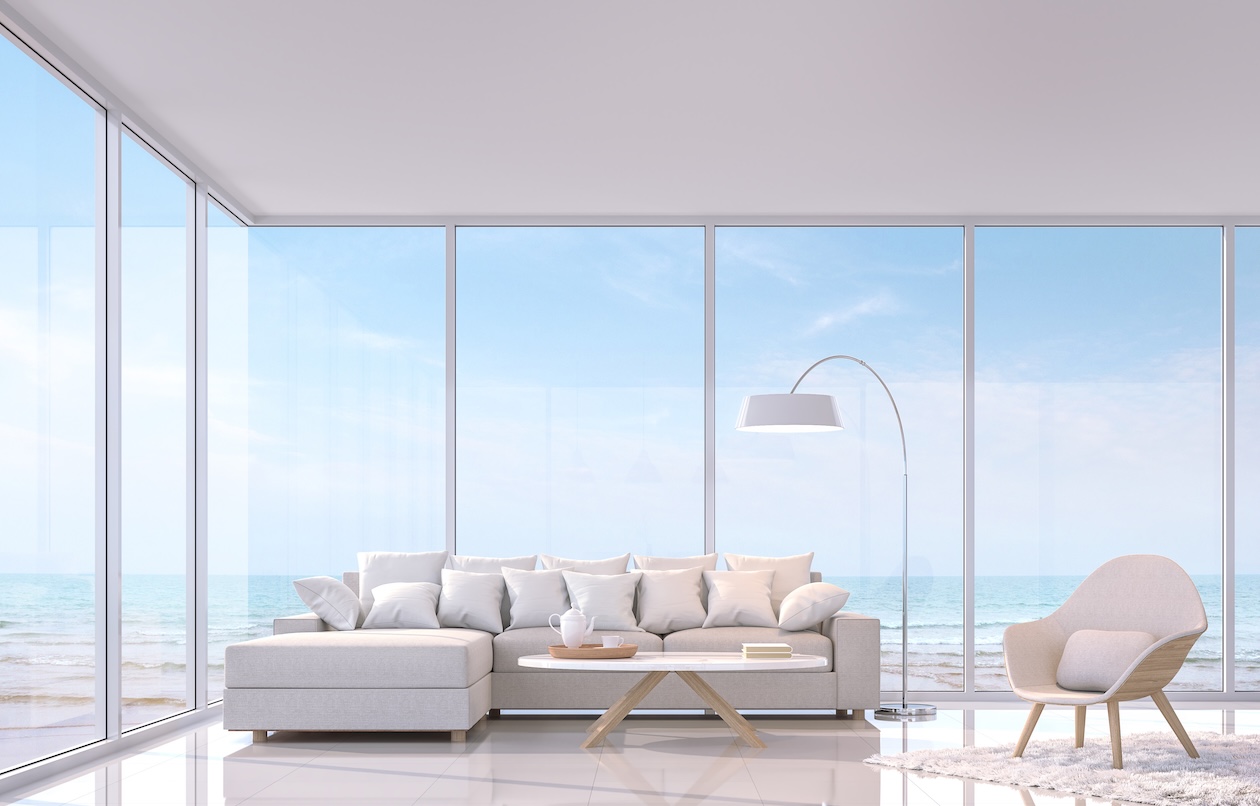
Alt text: “Bright modern coastal living room with neutral furniture, natural light, and minimalist design, showcasing materials suited for humid, sun-filled coastal homes.”editkeyboard_arrow_down
Fabric Considerations for Coastal Homes
Fabrics play a major role in both comfort and longevity, especially in humid, sun-filled spaces.
Select Performance-Driven Textiles
Solution-dyed acrylics and outdoor-rated fabrics resist fading, moisture, and mildew while offering sophisticated textures and patterns. Today’s indoor-outdoor fabrics no longer feel like a compromise. They rival traditional upholstery in softness and design.
Prevent Mold and Mildew
Regular vacuuming, prompt spill cleanup, and good airflow are essential. In high-humidity areas, avoid pushing furniture flush against walls where air circulation is limited.
Design Flexibility Without Sacrifice
Performance fabrics allow coastal homeowners to enjoy light-filled rooms and open-air living without constant worry about wear.
Choosing the right textiles is especially important in high-traffic spaces, which is why many coastal homeowners prioritize performance-driven materials highlighted in our guide to pet- and kid-friendly fabrics that deliver style without compromise.
Bonus Tips: Preventive Placement and Smart Design
Smart design choices reduce maintenance requirements before construction begins.
- Position furniture away from direct afternoon sun whenever possible
- Use breathable covers instead of plastic to prevent trapped moisture
- Incorporate UV-blocking window treatments to protect interior finishes
- Favor layered design that allows airflow around furnishings
Preventive design is one of the most effective long-term maintenance strategies.
Smart furniture placement and material selection go hand in hand, especially when it comes to rugs, as we explain in our room-by-room guide to choosing the right rug size for San Diego homes.
When to Call the Experts
Some signs call for professional attention:
- Persistent rust or corrosion
- Warping or cracking wood
- Fading that does not respond to conditioning
- Fabrics showing mildew or sun damage
Working with a custom design center ensures material selections are appropriate for coastal conditions from the start. Expert guidance helps homeowners avoid costly replacements while maintaining the integrity of their design vision.
WRF Design Center specializes in durable materials, thoughtful customization, and solutions tailored to coastal living. From reupholstery to custom outdoor furniture and window treatments, professional input makes a measurable difference in the longevity of these items.
Design Built for Coastal Living
Coastal homes demand more from their materials, and that is where WRF Design Center truly stands apart.
WRF specializes in coastal-ready furniture, reupholstery, and window treatments designed to perform in salty air, high humidity, and intense Southern California sun. From solution-dyed performance fabrics and rust-resistant metals to custom finishes and protective treatments, every recommendation is made with longevity in mind, not just appearance.
When you work with WRF, you gain access to:
- A curated fabric library featuring indoor-outdoor and high-performance textiles that resist fading, moisture, and mildew
- Custom furniture and reupholstery solutions tailored to coastal conditions
- Expert guidance on material selection, placement, and finishes that extend the life of your investment
- Thoughtful design support that balances durability with elevated style
Whether you are refreshing an existing piece, planning outdoor furnishings, or upgrading window treatments to reduce UV exposure, WRF helps ensure your home looks beautiful today and holds up for years to come.
Schedule a consultation to explore materials and solutions designed specifically for coastal living, or visit the showroom to experience the difference firsthand.
Because in a coastal home, good design is not just about how it looks. It is about how well it lasts.
Frequently Asked Questions About Coastal Furniture Maintenance
How does coastal air affect furniture over time?
Coastal environments expose furniture to salt air, moisture, and intense UV rays, all of which accelerate wear. Salt particles can corrode metal furniture, while humidity and sun exposure can dry out, warp, or fade wood and fabrics. Consistent maintenance of coastal furniture helps slow this damage and preserve both appearance and structural integrity.
What is the best way to protect wood furniture from salt air?
The most effective protection starts with proper finishes. Marine-grade varnishes, penetrating oils, and UV-resistant sealants create a barrier against salt and moisture. Regular cleaning and resealing are essential furniture care tips, especially for outdoor furniture or pieces placed near open windows and patios.
Which metals hold up best in coastal homes?
For coastal homes, aluminum, stainless steel, and powder-coated steel offer the strongest rust resistance. These materials are commonly used in high-quality outdoor furniture and decorative hardware because they require less frequent treatment while maintaining a clean, polished look.
How often should outdoor furniture be cleaned near the ocean?
Outdoor furniture in coastal areas should be rinsed with fresh water every few weeks to remove salt buildup. Deeper cleaning every few months helps prevent corrosion and surface breakdown. This simple habit is one of the most effective outdoor furniture maintenance practices for extending furniture life in salty air.
Are indoor-outdoor fabrics worth it for coastal homes?
Yes. Modern indoor-outdoor fabrics are designed to withstand humidity, UV exposure, and frequent cleaning without sacrificing style. They are an excellent choice for coastal homes because they reduce the risk of fading, mildew, and wear, making long-term furniture care much easier.
When should I consider professional furniture care or reupholstery?
If you notice rust, persistent fading, fabric mildew, or cracked wood, it may be time to seek professional help. A custom design center can recommend durable materials, refinishing treatments, or reupholstery solutions tailored to coastal conditions. This approach often costs less than replacement and significantly extends your furniture’s life.

 Pursu Agency