Choosing fabric for decorative pillows seems deceptively simple. You spot a beautiful pattern, notice the price difference, and think, “It’s just a pillow.” Easy win, right?
Not always.
For coastal homeowners and anyone furnishing a light-filled, lived-in space, the choice of pillow fabric carries long-term consequences. Durability, cleanability, color retention, and even how a room ages visually all hinge on this choice. What looks like a smart savings today can quietly become an ongoing expense tomorrow.
This guide walks through the true cost of ownership behind pillow fabrics. Not just the price tag, but what happens after sun exposure, spills, pets, kids, and years of daily use. If you have ever wondered whether premium fabrics are truly worth it, you are asking exactly the right question.
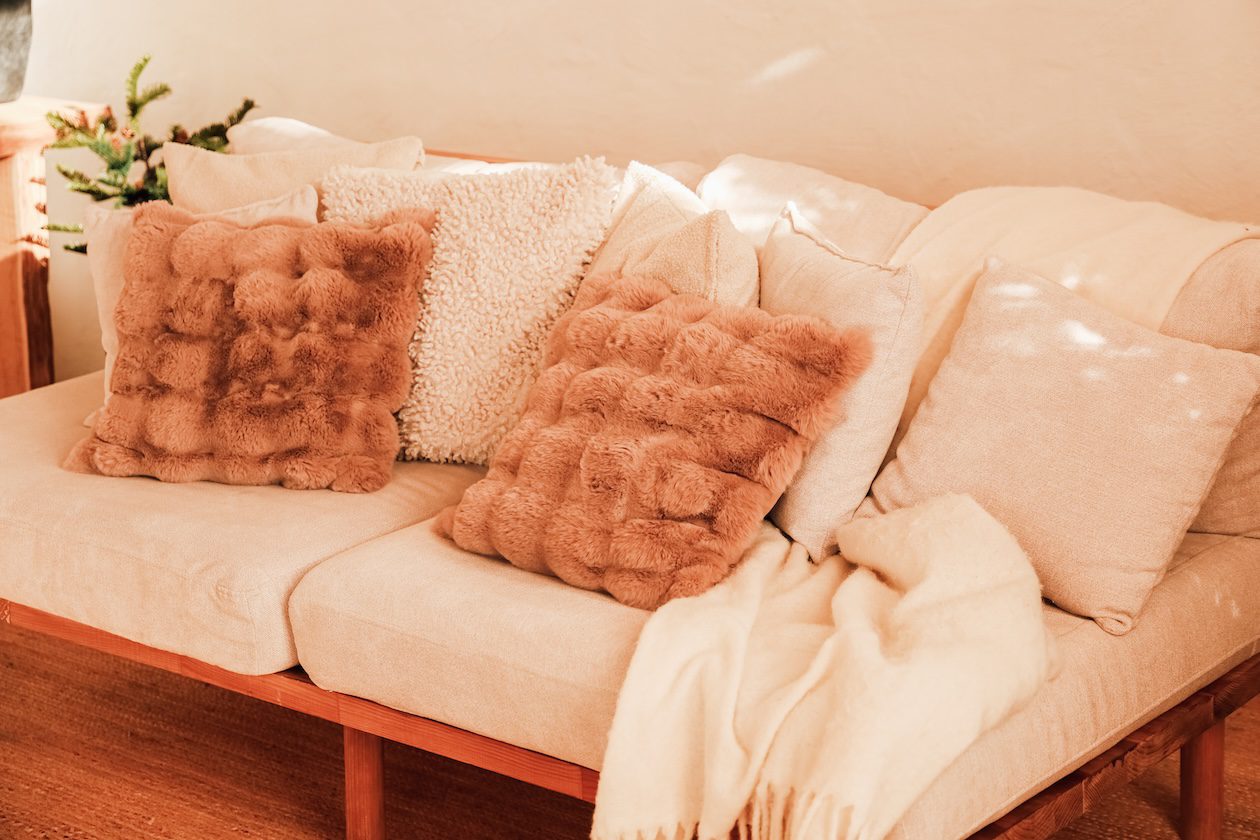
A couch sits in a bright room filled with sunlight. Several pillows of different textures lie on the couch. A soft blanket is draped over the side. Green plants are in the background.
Two Homes, Two Outcomes
Imagine two clients furnishing similar homes.
One selects a lower-priced upholstery fabric for their pillows. The pattern is appealing, the texture feels soft, and the cost seems reasonable. For the first year or two, everything looks great. Then subtle changes begin. Slight fading near the windows. A stain that never fully lifts. Corners that soften and lose definition. Eventually, the pillows no longer elevate the room. They quietly detract from it.
The second client chooses performance-grade materials from the start. The pillows maintain their color, structure, and finish year after year. Spills clean easily. The room still feels intentional rather than tired.
The difference between replacing pillows every few years and enjoying them long-term often comes down to material selection, as shown in Custom Pillows for Vacation Rentals: Stunning Before & After. When pillows are designed with durability in mind, they withstand daily use and continue to support the overall design rather than becoming the first thing to need replacing. Proportion matters too, especially when using a pillow size chart to match pillows to your furniture.
What Actually Defines “High-End” Pillow Fabric?
“High-end” is not a marketing buzzword when used correctly. It reflects measurable qualities in how a fabric is constructed, tested, and designed to perform.
Material Composition Matters
Premium pillow fabrics often use higher-quality fibers or advanced blends, such as:
- Linen blends that resist wrinkling and wear
- Silk blends engineered for durability rather than delicacy
- Solution-dyed acrylics designed for fade resistance
- Advanced synthetics developed specifically for performance upholstery
These materials are selected not just for appearance but also for how they perform in real-world conditions.
Weave, Rub Count, and Resistance
High-end fabrics are evaluated using standardized performance metrics:
- Weave tightness influences how easily fibers break down or pill
- Rub counts indicate how much friction a fabric can withstand before showing wear
- Fade resistance measures how well color holds up under UV exposure
Budget fabrics often fall short of these performance benchmarks or score significantly lower, especially in residential settings with sunlight and frequent use.
Performance Fabric vs. Decorative-Only Fabric
Decorative-only fabrics prioritize aesthetics over longevity. They can be beautiful but are best suited for low-touch, low-risk environments.
Performance fabrics are engineered to do both. They balance design with stain resistance, UV protection, and structural stability. For many homes, especially in Southern California, this distinction is crucial.
The Hidden Cost of Going Cheap
Lower-cost fabrics are not inherently bad, but they come with trade-offs that are often overlooked during the selection process. In bright, design-forward homes, those compromises tend to surface sooner and feel more noticeable.
Common Issues with Budget Fabrics
- Pilling from friction and daily contact
- Fading near windows or sliding doors
- Stains that set permanently or discolor fibers
- Loss of structure, causing pillows to look slouchy or uneven
These issues rarely show up immediately. They creep in quietly, which is why the fabric choice feels fine at first. Over time, however, wear becomes harder to ignore, especially in homes with light finishes and natural materials. In spaces designed around pale woods and airy palettes, such as those featured in Top White Oak Floor Trends in San Diego, fabric fading and texture breakdown stand out more than they would in darker, more forgiving interiors.
Shorter Lifespan, Higher Replacement Costs
When pillows need replacing every two to three years, the math changes quickly. The cost of new fabric, labor, and time adds up. What seemed economical becomes repetitive spending.
Environmental Impact
Frequent replacements also create unnecessary waste. More discarded textiles, more shipping, and more production cycles. Longevity is not just a financial consideration. It is a sustainability one.
Long-Term Maintenance Benefits of Premium Fabrics
High-end pillow fabrics are designed to reduce friction in daily life. Less stress, fewer rules, and more confidence in how your home functions.
Built-In Stain Resistance
Performance fabrics are treated or constructed to resist liquid absorption. Many spills remain on the surface long enough to be blotted. This feature alone dramatically extends the usable life of decorative pillows.
UV Resistance for Bright Homes
In sun-filled interiors, especially coastal homes, UV exposure is relentless. Premium fabrics resist fading, helping colors remain balanced across the room instead of bleaching unevenly over time.
Easier Cleaning, Less Anxiety
Spot cleaning is simpler and more effective with quality fabrics. You are not constantly worrying about guests, kids, or pets. The home feels more livable, not more fragile.
Structural Integrity Over Time
Higher-quality fabrics maintain their shape. They resist stretching, sagging, and warping. Pillows continue to look intentional instead of tired.
The Cost-Per-Year Argument
This is where perspective shifts.
Consider two scenarios:
- A $200 pillow that lasts 10 years equals $20 per year
- A $100 pillow that lasts 2 years equals $50 per year
Now add in hidden costs:
- Professional cleaning
- Replacement labor
- Time spent reselecting fabrics
- Visual degradation of the space
When viewed through a per-year cost lens, premium fabrics often cost less over the long term.

When to Splurge vs. When to Save
Not every pillow needs to be an investment piece. The key is strategic allocation.
Where to Invest
- High-traffic seating areas
- Homes with kids or pets
- Spaces near windows or sliding doors
- Frequently used living rooms and family rooms
These zones benefit most from performance-grade fabrics.
Where You Can Be Flexible
- Seasonal accent pillows
- Low-contact decorative pieces
- Short-term styling updates
Using budget fabrics intentionally, not universally, allows you to balance design goals with financial practicality.
Why Fabric Decisions Are Better With Guidance
Fabric selection is rarely straightforward. Two materials may look nearly identical but behave very differently once installed in a home.
This is where working with WRF changes the experience.
WRF offers a carefully curated fabric library that prioritizes performance, longevity, and design integrity. Their in-house experts help clients evaluate how fabrics will perform under sunlight, wear, pets, and lifestyle factors before decisions are finalized.
Design consultations focus on aligning budget with function, not pushing unnecessary upgrades. Clients gain clarity on where to invest, where to save, and how to create a space that remains beautiful over the years.
Access to premium performance fabrics, expert insights, and tailored recommendations removes guesswork and prevents costly mistakes.
Where Smart Fabric Choices Become Effortless
This is where WRF truly stands apart.
Instead of choosing fabrics in isolation, clients benefit from:
- A vetted fabric library that filters out underperforming options
- Side-by-side comparisons that reveal real differences in durability and care
- Expert recommendations based on how a space is actually used
- Design support that balances aesthetics, function, and long-term value
The result is not just better pillows. It means fewer replacements, easier maintenance, and a home that continues to look intentional rather than aging prematurely.
High-end pillow fabrics are not about indulgence. They are about making fewer compromises over time. With the right guidance, the choice becomes less about cost and more about confidence.
Frequently Asked Questions About Pillow Fabrics and Long-Term Value
Are high-end throw pillows really worth the investment?
Yes, especially when you factor in longevity and maintenance. High-end throw pillows made with quality upholstery fabric tend to last significantly longer than budget options. They resist fading, pilling, and staining, resulting in fewer replacements and lower annual cost. Over time, one well-made pillow often costs less than repeatedly replacing cheaper alternatives.
What is the best fabric for decorative throw pillows in a busy home?
For homes with children, pets, or abundant natural light, performance upholstery fabric is usually the best choice. These fabrics are engineered for durability, stain resistance, and color retention while still offering a soft, cozy feel. Linen blends and performance synthetics are especially popular for daily-use throw pillows.
How long should designer throw pillows last?
With proper fabric selection, designer throw pillows can last 8–10 years or more. The lifespan depends on the fabric type, exposure to sunlight, and use. Performance upholstery fabrics and high-quality linen blends generally outlast decorative-only fabrics by several years.
Can I use linen for throw pillows, or is it too delicate?
Linen is an excellent option when chosen carefully. A high-quality linen pillow cover or linen-blend upholstery fabric offers breathability, texture, and timeless appeal. Performance-treated linen or linen blends are ideal for throw pillows that require a balance of style and durability. Pure linen is best reserved for lower-traffic areas.
What’s the difference between pillow covers and pillow inserts?
Pillow covers determine the look, texture, and durability of your throw pillows, while pillow inserts affect comfort and shape. Investing in quality covers made from durable upholstery fabric and pairing them with the right inserts helps pillows maintain structure and a polished appearance over time. High-quality inserts also prevent sagging and uneven wear.
Are decorative pillow covers interchangeable with upholstery fabric?
Not always. Decorative pillow covers are sometimes made from lighter-weight fabrics intended for visual impact rather than daily use. Upholstery-grade fabrics are thicker, more durable, and tested for wear. For throw pillow covers used on sofas or sectionals, upholstery fabric is usually the better long-term choice.
Do chenille upholstery fabrics work well for throw pillows?
Yes, when properly selected. Chenille upholstery fabric can add softness and warmth, making a space feel more cozy, but quality matters. Higher-end chenille performs better against crushing and wear, especially when used for throw pillows in seating areas.
Should throw pillows match drapery fabric?
They can, but they do not have to. Using drapery fabric for pillows is best suited to low-use or decorative settings. In most living spaces, combining drapery fabric for visual cohesion with durable upholstery fabric for throw pillows offers a better balance of style and function.
How do I know when to splurge on pillow covers versus save?
Splurge on pillow covers for high-traffic areas, sun-exposed rooms, and frequently used seating. Save on seasonal or accent throw pillow covers that are rotated out regularly. This approach keeps your home decor flexible without sacrificing durability where it matters most.
Why does working with a designer make fabric selection easier?
A designer helps translate lifestyle needs into durable fabric choices. At WRF, clients gain access to a curated fabric library featuring leading designer textile houses, along with expert guidance on linen, performance upholstery fabrics, and specialty options. This prevents costly mistakes and ensures pillows look beautiful long after installation.

 Pursu Agency