
Key Points
- Bare windows can leave coastal interiors feeling stark, even when the rest of the room is well designed.
- Window treatments add softness, texture, and proportion while helping manage sunlight and privacy.
- Custom drapery and shades can preserve coastal views while responding to large windows, sliders, and the room’s architecture.
Large windows are one of the defining features of many Southern California homes. Expanses of glass bring in natural light, frame outdoor views, and help create the indoor-outdoor connection that makes coastal living so appealing.
That can make covering those windows seem counterintuitive.
Why add fabric to a beautiful view? Why interrupt all that sunlight?
The answer has less to do with covering the windows and more to do with completing the room around them.
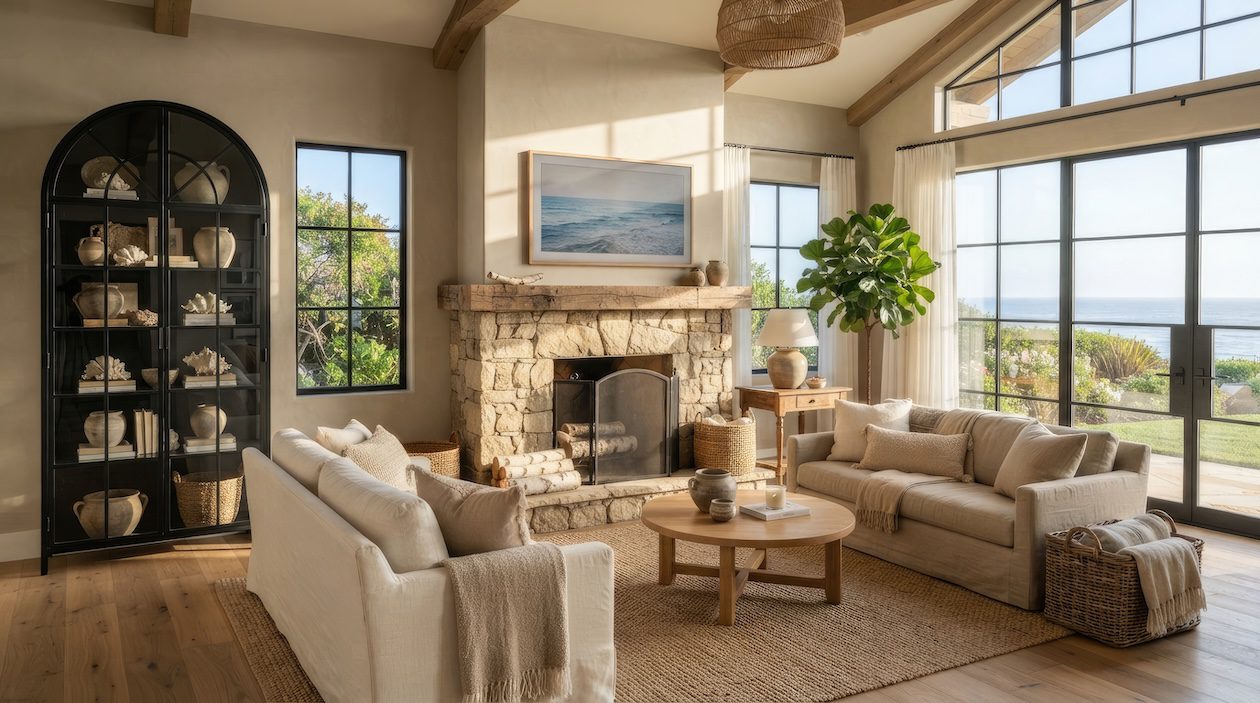
In a thoughtfully designed interior, window treatments are part of the overall composition. They can soften hard architectural surfaces, improve proportion, filter intense sunlight, provide privacy, and introduce another layer of texture. Without them, even a room with beautiful furniture, rugs, lighting, and finishes can sometimes feel surprisingly stark or unfinished.
That is especially true in California casual interiors, where the palette is often restrained and much of the visual interest comes from texture, scale, and subtle material layering.
Why Windows Have Such a Big Impact on a Room
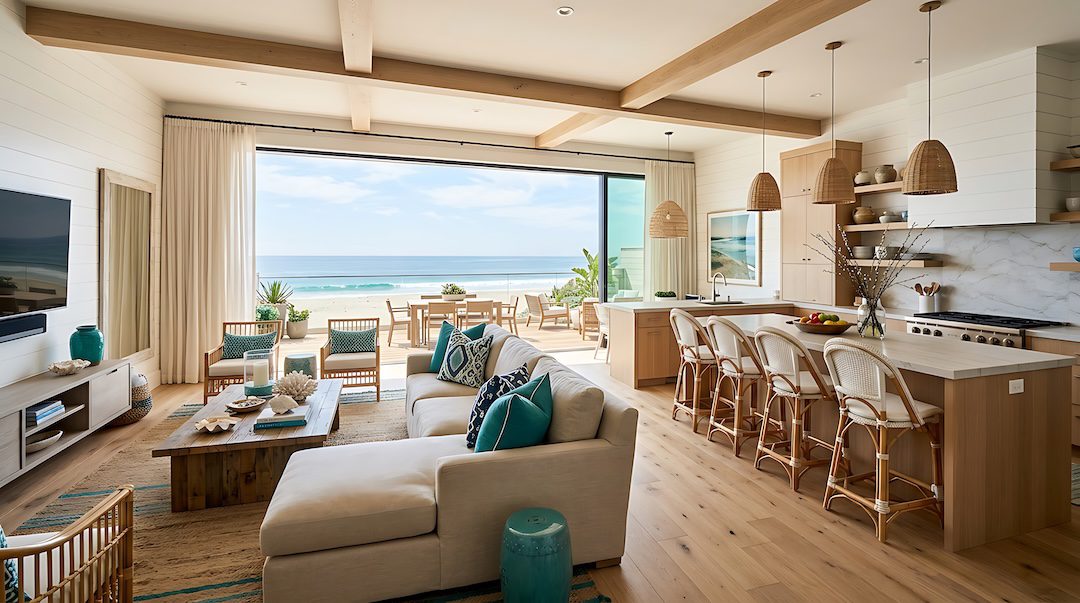
Windows are some of the largest visual elements in a room. Sliding doors and multi-panel glass systems can span nearly an entire wall, making glass a dominant material in many Southern California homes.
Not every window needs to be covered. But when a furnished room still feels incomplete, bare windows may be part of the reason. As we discuss in Why Your Home Doesn’t Feel Finished, textiles and other finishing layers can help turn individual furnishings into a more intentional interior.
Window Treatments Add Softness to Coastal Interiors
Coastal homes often contain many hard surfaces, including glass, stone, wood flooring, countertops, tile, and metal. Fabric provides a useful counterpoint through softness, movement, and texture.
Drapery can break up a large wall of glass with vertical folds, while woven shades or sheers introduce texture without making the room feel heavy. This is particularly important in neutral coastal interiors, where texture often provides much of the visual interest.
It is also one reason some coastal homes can feel cold. Relaxed drapery, woven materials, and streamlined shades can soften hard surfaces while preserving the bright, airy character of coastal interior design.
Drapery Can Change the Perceived Scale of a Room
Drapery can also change how a room’s architecture is perceived. Mounting panels higher than the window can draw the eye upward, while extending them beyond the window opening can give the glass greater visual presence and leave more of the view exposed when the panels are open.
Fullness and finished length matter too. Panels that are too narrow can look undersized next to large windows or sliding doors, while an awkward finished length can interrupt the vertical line. Custom window treatments allow these proportions to respond to the architecture rather than predetermined dimensions.
Window Treatments Help Manage Light and Privacy
Natural light is an asset in coastal design, but more sunlight is not always better. Direct sun can create glare and make rooms uncomfortable at certain times of day. The U.S. Department of Energy notes that thoughtful daylighting considers natural light as well as unwanted glare and heat.
Window treatments provide control without necessarily making a room dark. Sheer drapery can diffuse strong sunlight, while solar or roller shades provide more targeted glare control.
They can also balance views with privacy. Depending on the fabric and lighting conditions, sheers may provide some daytime screening, while shades or drapery can provide greater coverage when needed. Layered treatments give homeowners more flexibility as light and privacy needs change throughout the day.
For a closer look at options suited to the Southern California environment, see Discover the Perfect Window Treatments for Coastal Living.
Large Sliding Doors Require a Different Approach
Sliding and stacking doors are central to indoor-outdoor living in many San Diego homes, but their size and function require additional planning.
Drapery needs somewhere to stack when open without interfering with a frequently used doorway. Hardware, handles, adjacent walls, furniture placement, and available clearance can all influence the design. For especially wide openings, these considerations may help determine whether drapery, shades, or a combination works best.
Drapery, Shades, or Both?
Drapery is particularly effective when a room needs softness, vertical scale, or a stronger textile presence. Shades provide a more streamlined way to manage light and privacy without adding significant fabric volume around the window.
Layering the two can provide greater flexibility. A shade can handle practical light and privacy needs while drapery contributes softness and scale. The right approach depends on the architecture and how the room is used.
Keeping Custom Drapery California Casual
Custom drapery does not have to mean ornate hardware, heavy fabrics, or formal rooms. In a California casual home, customization is often about getting the scale, fabric, construction, and function right.
Relaxed fabrics, understated textures, clean silhouettes, and restrained hardware can complement a coastal home without overwhelming it. Custom drapery and window treatments can also accommodate large windows, sliding doors, unusual ceiling heights, and specific light-control needs while maintaining a relaxed aesthetic.
Common Window Treatment Mistakes
Even beautiful materials can look wrong when proportion and function are overlooked. Common problems include mounting drapery too low, using panels that are not full enough for the opening, choosing fabric without considering sunlight, or failing to account for how frequently a door or window is used. Treatments throughout a home should feel visually connected, but they do not have to be identical when different rooms have different functional needs.
Complete the Room With Custom Window Treatments From WRF
The right window treatment can preserve the light and views homeowners love about Southern California homes while adding softness, proportion, privacy, and greater control over sunlight.
At WRF Design Center, homeowners can work with experienced designers to create custom drapery and window treatments tailored to their space. WRF’s services include fabric selection and pleat-style customization, with options including custom drapery, Roman shades, curtains, valances, swags, and cornices.
Whether you’re addressing expansive sliding doors or windows that feel disconnected from an otherwise finished room, WRF can help make them feel like an intentional part of the overall design.
FAQs About Custom Window Treatments
Are custom window treatments worth it for large windows?
Custom window treatments can be especially useful for large windows and sliding glass doors because the fabric, fullness, length, mounting height, and hardware can be planned around the exact dimensions and function of the opening.
What window coverings work best for a coastal home?
Drapery, Roman shades, roller shades, and layered window coverings can all work well in coastal homes. The right choice depends on the room’s light, privacy, function, and overall design. Relaxed fabrics and streamlined treatments can provide softness without making a California casual interior feel overly formal.
Do I need both shades and drapery?
Not necessarily. Drapery can add softness and visual scale, while shades can provide streamlined light and privacy control. Layering both can be useful when a room has multiple window treatment needs, allowing each layer to serve a different purpose.

 Pursu Agency