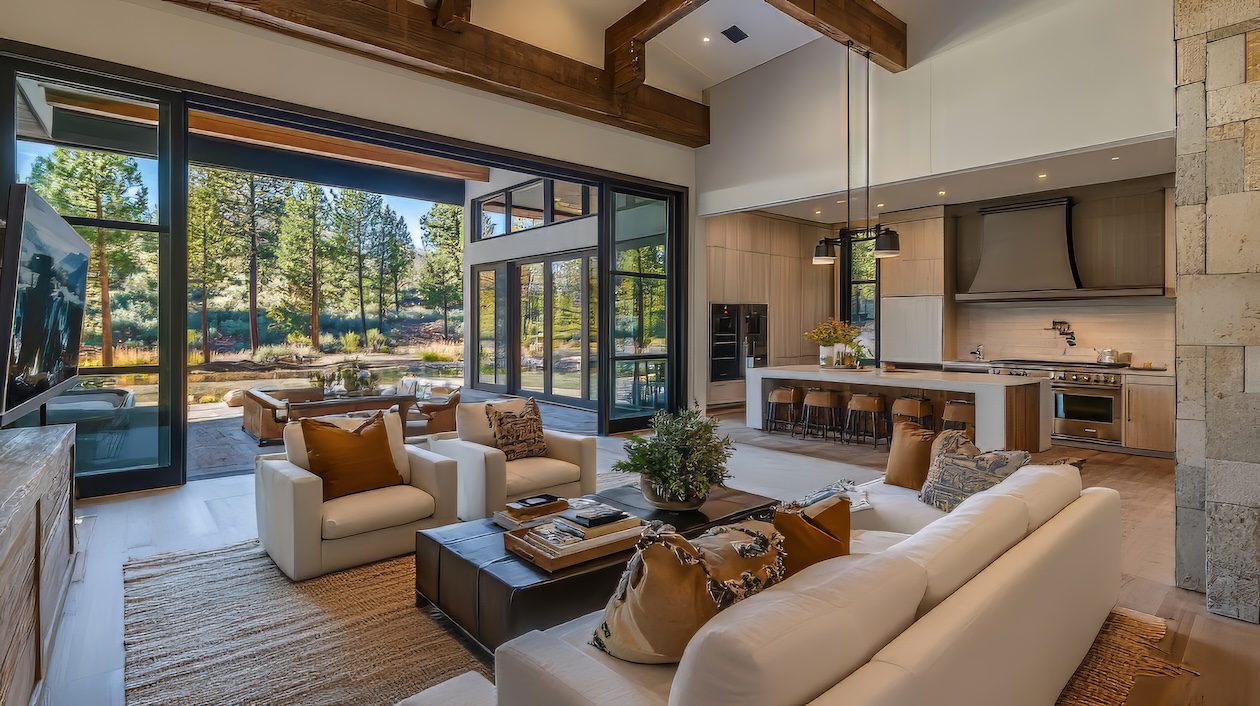
California Casual is one of the most recognizable design styles in Southern California because it feels both elevated and easy to live in. In San Diego especially, the look reflects the way people want their homes to feel: open, comfortable, light-filled, and closely connected to the outdoors.
What makes this style so appealing is that it does not rely on overly formal rooms or trend-heavy finishes. Instead, it uses a thoughtful mix of natural materials, soft color palettes, relaxed silhouettes, and durable details that support everyday living. The result is a home that feels refined without feeling rigid.
For homeowners renovating, furnishing, or updating a coastal Southern California home, understanding the formula behind California Casual can make design decisions much easier. It also reveals why the style depends so heavily on the right upholstery, fabrics, window treatments, and indoor-outdoor materials to truly work.
What Defines the California Casual Aesthetic?
California Casual is best understood as relaxed sophistication. It blends the warmth of natural textures with a clean, edited look that never feels too decorated or overly themed.
In San Diego homes, this often means spaces that feel bright but not stark, comfortable but not bulky, and polished without looking precious. Rooms are designed to support real life, from family lounging to entertaining friends to opening the doors for an indoor-outdoor gathering on a warm evening.
At its core, California Casual is shaped by a few consistent ideas:
- relaxed but refined interiors
- airy, light-driven spaces
- natural materials with visible texture
- a restrained, nature-inspired palette
- furniture that prioritizes comfort
- seamless connection between indoor and outdoor living
The style may look effortless, but it works best when every layer is considered.
Relaxed But Refined is the Foundation
One of the biggest misconceptions about California Casual is that it is simply casual. In reality, the style depends on balance. If everything is too loose, too rustic, or too minimal, the room can quickly feel unfinished. If everything is too polished or formal, it loses the easygoing spirit that defines the aesthetic.
That balance is what gives the style its staying power. Upholstered pieces are often generous and inviting, but their lines still feel intentional. Decorative elements are usually restrained, but textures and materials keep the space from feeling flat. The mood is welcoming, though never cluttered.
This is where custom design choices often make the greatest difference. The right proportions, fabric selections, and finishing details are what turn a nice room into one that truly captures California Casual style.
Light, Airy Color Palettes Set the Tone
Color plays a major role in California Casual interiors, but the palette is usually quieter than many people expect. Rather than relying on bold contrasts or obvious beach motifs, the look tends to build from soft, layered neutrals.
Common foundation tones include:
- warm white
- cream
- sand
- beige
- taupe
- driftwood
- soft greige
These colors help reflect natural light and create the calm, sun-washed look that works so well in coastal homes. They also provide flexibility, allowing texture and shape to carry more of the design.
Accent colors typically come from nature rather than from trend-driven palettes. Ocean blues, muted sage, clay, terracotta, and sun-faded greens often appear in a subtle way through pillows, art, accessories, or textiles.
The goal is not to create a monochromatic room that feels flat. It is to create depth through tonal variation so the space feels soft, cohesive, and lived in.
Natural Materials Give the Style its Authenticity
If color sets the tone, material selection gives California Casual its character. Natural materials are one of the clearest signatures of the style because they bring warmth, texture, and a sense of place.
In San Diego homes, some of the most common materials include white oak, linen, cotton, stone, jute, rattan, cane, and ceramic finishes with an organic look. These elements reflect the surrounding landscape and support the understated luxury that defines the aesthetic.
White oak is especially popular because it adds warmth without heaviness. It works well on floors, cabinetry, accent furniture, and architectural details. Linen and linen-look fabrics help soften a space while keeping it breathable and relaxed. Woven textures introduce variation and keep neutral rooms from feeling one-note.
Material quality matters here. California Casual depends on finishes that feel honest and tactile, not overly glossy or artificial. This is one reason the look can fall flat when people try to recreate it too quickly with mass-market pieces that lack depth and texture.
Oversized Seating Helps Rooms Feel Inviting
Comfort is central to California Casual design, which is why seating tends to be deeper, softer, and more generous in scale. In many San Diego homes, open layouts and larger living spaces call for furniture that can visually hold the room while still feeling relaxed.
Deep sofas, oversized sectionals, slipcovered lounge chairs, and cushioned dining banquettes all support the laid-back lifestyle associated with the style. These pieces encourage gathering, lounging, and long conversations, which makes them especially well suited to family homes and entertainment-focused spaces.
Scale is critical. One of the fastest ways to miss the look is to choose furniture that is too small for the room. Undersized seating can make a space feel disconnected and unfinished, especially in open floor plans with high ceilings or strong indoor-outdoor flow.
Custom upholstery is often the best solution when proportions matter. It allows homeowners to tailor seating depth, cushion style, silhouette, and fabric selection so pieces feel both comfortable and visually grounded in the space.
Layered Textiles Add Warmth Without Clutter
Because California Casual interiors often start with light walls and neutral furnishings, textiles do a lot of the work when it comes to making a room feel finished. Pillows, throws, rugs, and window treatments add softness and dimension while preserving the overall simplicity of the design.
The key is layering with restraint. Instead of piling on bold prints or high-contrast accents, the style leans toward subtle pattern, tactile weaves, soft stripes, and tonal variation. Texture matters more than loud color.
A room might combine:
- a soft woven area rug
- linen drapery panels
- textured neutral pillows
- a boucle or performance upholstery fabric
- a lightweight throw in a muted earth tone
When done well, these layers make the room feel rich and welcoming without disrupting the calm palette.
Window treatments are especially important in California Casual interiors because they help frame natural light while softening architecture. The right drapery or woven shade can make a room feel more complete, more tailored, and more connected to the natural textures found throughout the rest of the space.
 Indoor-Outdoor Continuity is Essential in San Diego Homes
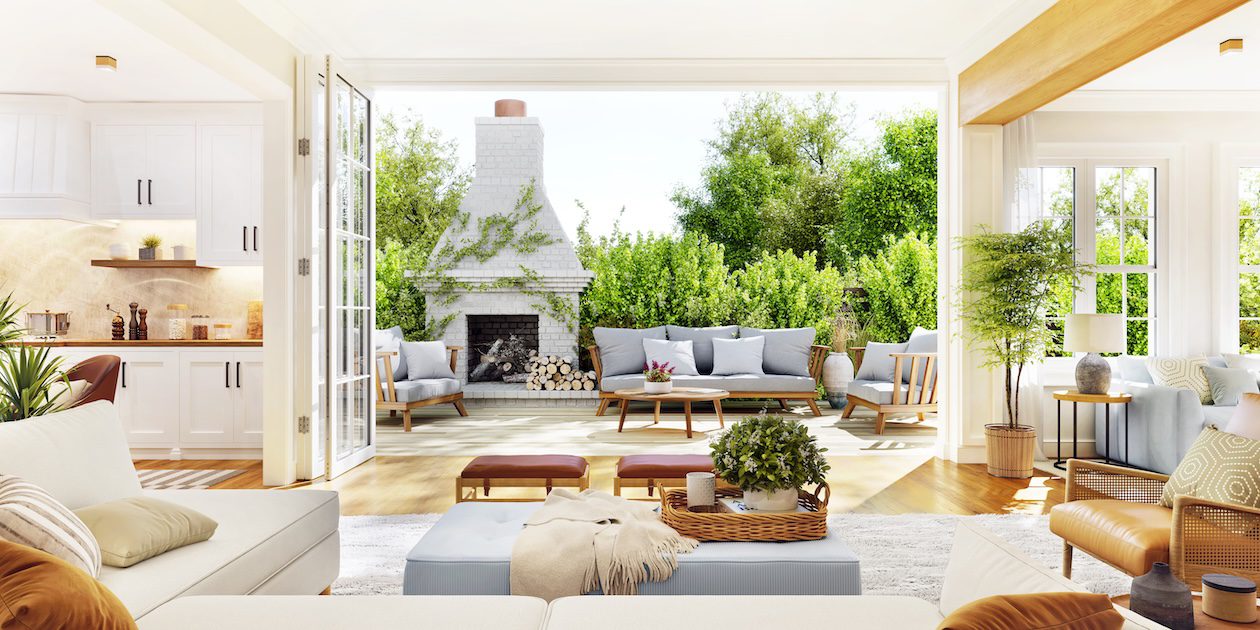 Indoor-Outdoor Continuity is Essential in San Diego Homes
In San Diego, California Casual is not just an interior style. It is a lifestyle response to climate, architecture, and the way people actually use their homes. Many of the region’s most successful spaces blur the line between indoors and out.
Slide-away doors, large expanses of glass, covered patios, outdoor kitchens, and furnished terraces all contribute to this effect. Rather than treating the patio or loggia as separate from the home, California Casual design extends the same visual language across both environments.
That may mean repeating similar tones, using complementary upholstery styles, continuing material palettes, or choosing furnishings that feel equally appropriate on both sides of the glass. Outdoor rooms are often designed with the same attention to comfort and texture as interior living rooms.
This continuity makes the home feel larger, calmer, and more cohesive. It also supports the relaxed entertaining style that is so common in Southern California.
Fabric Choices Make or Break the Look
California Casual may look soft and easy, but in coastal homes it needs to perform. Sun exposure, daily use, entertaining, kids, pets, and open-door living all place real demands on upholstery and soft furnishings.
That is why fabric selection is such an important part of achieving the look successfully. Performance fabrics are often the best fit for San Diego homes because they allow homeowners to maintain the soft, natural appearance of linen or cotton while gaining durability, cleanability, and fade resistance.
These fabrics work especially well in:
- sun-facing living rooms
- family rooms with deep seating
- breakfast banquettes
- window benches
- covered outdoor living areas
- indoor-outdoor transition spaces
Modern performance textiles have come a long way. Many now replicate the texture and drape of natural fibers, making it possible to preserve the relaxed, refined feel of California Casual without sacrificing practicality.
This is one of the clearest areas where professional guidance matters. A fabric may look perfect in a showroom but perform poorly in a bright coastal room. Choosing the right textile for the light, use, and location of the piece helps ensure the design still looks beautiful over time.
The Style is Understated, Not Theme-Driven
Another defining characteristic of California Casual is what it avoids. The most successful spaces do not rely on obvious coastal symbols or overly literal beach references. There are no rules saying a coastal California home needs rope accents, anchor motifs, seashell overload, or a room full of blue-and-white everything auditioning for a yacht club commercial.
Instead, the style draws from the coast in a more sophisticated way. It uses light, texture, openness, and natural materials to create a mood rather than a theme. The influence is atmospheric, not decorative.
That is what allows the style to feel timeless. It is rooted in lifestyle and environment, not in novelty.
Common Mistakes When Trying to Achieve California Casual
Because California Casual looks simple, it is easy to underestimate how edited the style really is. A few common mistakes can quickly weaken the effect.
One of the biggest is using too many competing colors. Even individually beautiful pieces can create visual noise when the palette is not restrained. Another common issue is choosing furniture that is too small, especially in large open rooms where underscaled pieces feel disconnected.
Homeowners also often lean too heavily into coastal decor themes, which can make the space feel generic rather than refined. And in some cases, the biggest issue is material quality. When finishes, fabrics, and textures do not have enough depth, the room can feel flat or overly manufactured.
To avoid these problems, focus on simplicity, texture, proportion, and cohesion. California Casual works best when each element supports the same overall mood.
How to Bring the Look Together in a Real Home
The best California Casual interiors are not built from one hero piece or one trend. They come together through a series of layered choices that support the same design language.
That usually means combining:
- soft, light-driven colors
- natural woods and woven materials
- comfortable, properly scaled seating
- durable upholstery with an elevated texture
- subtle textile layering
- seamless indoor-outdoor transitions
When these elements work together, the home feels calm, inviting, and quietly luxurious. It supports everyday living while still feeling intentional and polished.
For homeowners in San Diego, this is often the sweet spot. The home feels beautiful enough for entertaining and elevated enough to reflect the architecture, but still grounded in comfort and ease.
Why California Casual Works So Well in San Diego
Few places support this aesthetic as naturally as San Diego. The region’s climate, light quality, architecture, and outdoor lifestyle all reinforce the principles behind California Casual design.
Homes here benefit from bright natural light, year-round entertaining, and an easy relationship between indoor and outdoor spaces. Materials need to withstand sun and wear, but they also need to feel soft and welcoming. Rooms are expected to function for real life, not just look good in photos.
That is why California Casual continues to resonate so strongly. It is not just a trend. It is a practical, beautiful response to how Southern California homeowners want to live.
Bring California Casual to Life With WRF Design Center
California Casual may look effortless, but it relies on thoughtful choices in materials, scale, and performance.
WRF Design Center helps simplify that process with:
- custom upholstery designed for your space
- curated, durable fabrics that maintain a soft, natural look
- window treatments that enhance light and texture
- indoor-outdoor solutions for seamless living
With the right guidance and materials, you can create a home that feels relaxed, refined, and built for coastal living.
Frequently Asked Questions
What is California casual design in interior design?
California casual design is an interior design style that blends relaxed comfort with refined materials. It typically features neutral color palettes, natural textures, and a strong connection between indoor and outdoor living spaces, especially in coastal areas like San Diego.
How do you achieve a California casual style at home?
To create a California casual style, focus on layering soft neutrals, incorporating natural materials like wood and linen, and choosing comfortable, well-scaled furniture. Prioritizing indoor-outdoor living and using durable performance fabrics also helps achieve the look.
What makes California casual interior design different from coastal decor?
California casual interior design is more refined and less theme-driven than traditional coastal decor. Instead of obvious beach elements, it emphasizes texture, simplicity, and a natural color palette to create a relaxed but elevated living environment.

 Pursu Agency