Key Points
- Quiet luxury relies on quality materials, texture, and craftsmanship rather than statement décor.
- Warm woods, natural stone, tactile fabrics, and understated metals create depth in California casual interiors.
- Repeating complementary materials throughout the home creates a cohesive, timeless look.
Quiet luxury has become a popular phrase in interior design, but the idea behind it is hardly new. The most sophisticated homes have long relied on quality materials, thoughtful proportions, craftsmanship, and restraint rather than conspicuous décor.
That approach feels particularly natural in Southern California.
California casual design already favors relaxed spaces, natural light, organic materials, comfortable furnishings, and a strong connection between indoors and outdoors. Quiet luxury builds on those qualities by paying closer attention to what a room is made of, rather than simply adding more to it.
Warm wood, softly varied stone, tactile fabrics, woven fibers, textured walls, and understated metals can give an interior richness without making it feel formal or overdesigned. The result is a home that feels elevated when you enter it, even when no single piece is demanding attention.
For homeowners considering interior design in Solana Beach, San Diego, and throughout Southern California, these materials can provide a timeless foundation for a home that feels both polished and easy to live in.
What Quiet Luxury Looks Like in a California Casual Home
Quiet luxury is less about a particular decorating style than the way materials, craftsmanship, proportion, and details work together.
It Is More About Materials Than Expensive Objects
A room does not need recognizable designer pieces or attention-grabbing finishes to feel luxurious. In fact, filling a space with too many statement pieces can work against the understated quality that makes quiet luxury appealing.
Instead, attention shifts to subtler details. The grain of a wood cabinet, the irregular veining of stone, the weight of linen drapery, the texture of upholstery, or the finish on a metal fixture can become part of the experience of the room.
Material quality is especially important in pared-back interiors because there are fewer decorative elements competing for attention. When the palette is restrained, texture, scale, craftsmanship, and natural variation become more noticeable.
California Casual Makes Luxury More Relaxed
Luxury does not have to mean formal rooms, glossy surfaces, or furnishings that feel too precious for everyday use.
In a California casual home, sophistication tends to be softer. Seating is comfortable, fabrics feel inviting, natural materials are allowed to show variation, and indoor spaces often connect visually and physically with patios, gardens, and outdoor living areas.
The goal is not perfection. It is a home that feels considered without appearing overly styled.
Warm Wood Creates the Foundation
Wood introduces warmth immediately, making it particularly valuable in interiors dominated by whites, creams, stone, and other pale neutrals.
White Oak Keeps Interiors Light and Natural
White oak works naturally within California casual interiors because its grain adds visible texture while its generally light appearance can complement bright, airy spaces.
It can be incorporated through flooring, cabinetry, built-ins, furniture, doors, beams, and other architectural details. Using wood across several of these elements can establish warmth before furnishings and accessories are even introduced.
The finish matters, too. A finish that allows the grain and character of the wood to remain visible generally feels more organic than one that makes the surface appear heavily coated or overly uniform.
Walnut and Darker Woods Introduce Depth
Not every wood needs to be pale.
Walnut and other deeper wood tones can provide needed contrast in rooms filled with light upholstery, white walls, pale oak, and natural stone. A darker console, dining table, occasional chair, or built-in detail can visually ground the space.
This contrast helps prevent a neutral interior from becoming washed out while maintaining a natural material palette.
Mixing Woods Creates a More Collected Interior
Wood tones do not have to match perfectly. In many cases, variation makes an interior feel more layered and developed over time.
The key is creating relationships among the woods rather than selecting them independently. Undertones, repetition, contrast, and the amount of each finish in the room all matter.
When handled intentionally, mixed woods can make a California casual home feel collected rather than coordinated from a single furniture set.
Natural Stone Adds Character Without Adding Clutter
Stone provides pattern and visual movement without requiring additional decoration.
Travertine and Limestone Bring Subtle Variation
Travertine and limestone can introduce warm, earthy character through fireplaces, flooring, tables, architectural details, and, when an appropriate stone is selected, certain countertop applications.
Their appeal comes partly from variation. Subtle differences in tone, pores, markings, and texture keep broad expanses of stone from feeling completely flat.
In a neutral room, a substantial stone coffee table or fireplace surround can become a focal point through material and scale alone.
Marble Works Best When It Does Not Feel Overly Polished
Marble can work beautifully in relaxed California interiors when the specific stone and finish suit the rest of the room.
A honed finish offers a softer, less reflective appearance than highly polished marble, which can help the material sit comfortably beside natural wood, linen, wool, and other tactile finishes.
Marble does not need dramatic veining to have impact. A quieter stone can provide richness through subtle tonal movement and natural variation.
Natural Variation Is Part of the Appeal
Real stone is not perfectly consistent, and that is part of its character.
Veining, tonal changes, markings, pits, texture, and other natural features can vary by stone and slab. The Natural Stone Institute provides additional resources for homeowners who want to learn more about natural stone selection, care, and characteristics. Rather than treating every difference as something that must be eliminated, designers can incorporate that variation into the overall composition.
These differences give natural materials a quality that manufactured repetition cannot completely replicate.
Linen and Woven Textiles Soften the Architecture
Hard surfaces need softness, particularly in homes with stone floors, expansive glass, wood cabinetry, and open layouts.
Natural-Looking Fabrics Bring Movement and Texture
Linen and linen-look textiles can bring relaxed texture to upholstery, drapery, pillows, cushions, and other soft furnishings.
Drapery is particularly effective because fabric introduces softness across a large vertical surface. Upholstery and cushions can then repeat related textures elsewhere in the room.
Material selection should still reflect how a piece will be used. Performance requirements, sun exposure, pets, children, entertaining habits, and maintenance expectations can all influence whether a particular natural fiber or a performance textile with a similar appearance is the better choice.
Texture Matters Especially in Neutral Rooms
A palette of cream, ivory, taupe, sand, and warm gray can be sophisticated, but color alone is not enough to create depth. Without enough texture, contrast, and warmth, coastal homes can sometimes feel cold despite having a beautiful neutral palette.
Consider the difference between a smooth wall, nubby upholstery, loosely woven drapery, a wool rug, and a soft pillow. Even if all five are similar in color, their surfaces interact with light differently.
That variation allows neutral interiors to remain visually interesting without depending on strong patterns or numerous colors.
Wool and Jute Give Rooms a Stronger Foundation
Rugs can do more than provide softness underfoot. They can visually organize large rooms and establish a foundation for furniture groupings.
Rugs Add Warmth to Hard Coastal Surfaces
Open Southern California homes often contain substantial amounts of hard material, including wood, stone, tile, glass, and metal.
A wool or jute rug can counterbalance those surfaces with warmth and texture. Rugs are particularly useful in open-concept living room design, where they can help define a seating or dining area without adding physical walls.
Material should be selected with the room’s actual demands in mind. Wool and jute behave differently in terms of feel, cleaning, moisture tolerance, and durability, so placement matters.
Natural Texture Creates Visual Interest Without Pattern
A rug does not need a bold motif to contribute to the design.
Braided, looped, woven, or otherwise textured surfaces can create dimension through shadow and tactile variation. This is particularly useful when the goal is a calm interior with enough detail to avoid feeling sparse.
Cane and Woven Materials Add an Organic Layer
Woven materials introduce another scale of texture between larger architectural finishes and softer textiles.
Woven Elements Should Be Accents, Not a Theme
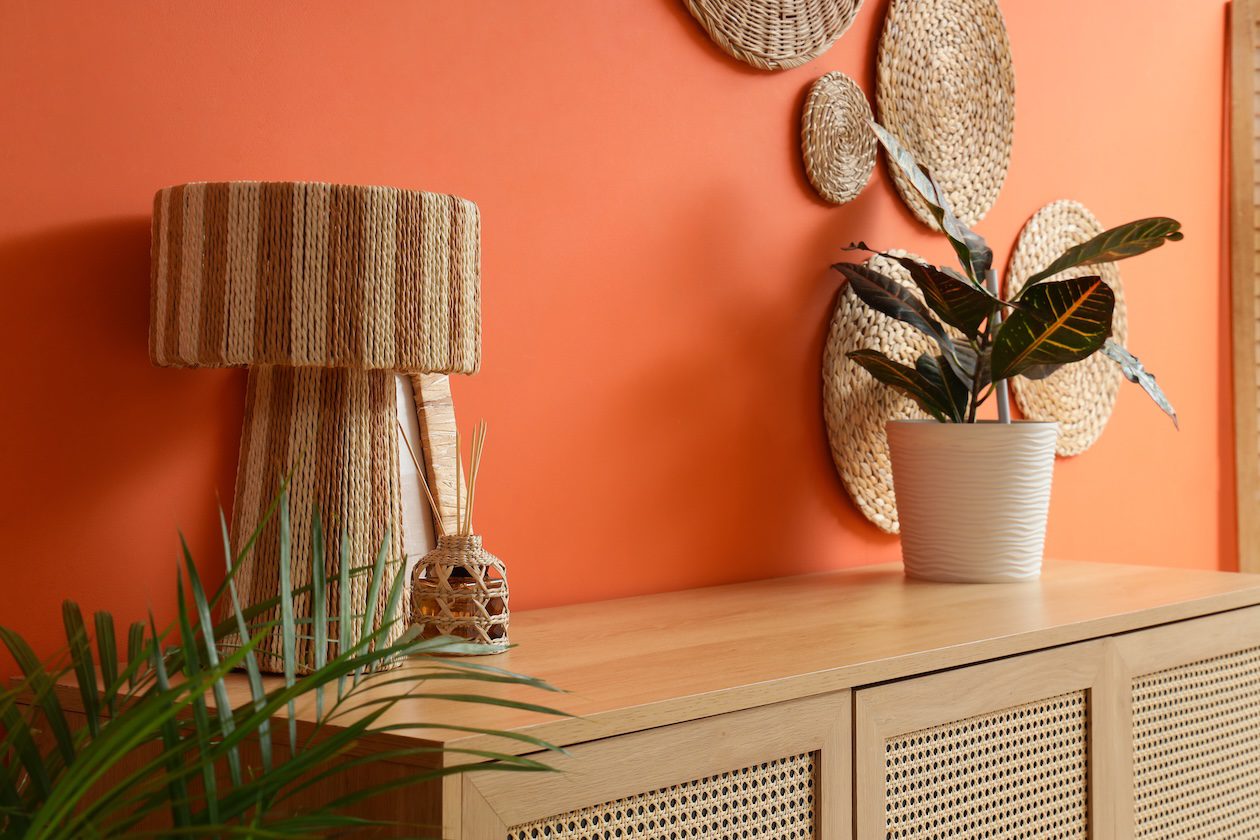
Cane, rattan, and other woven materials can appear in chair backs, cabinet inserts, baskets, lighting, occasional tables, or decorative accessories.
A few thoughtfully placed elements can bring warmth and craftsmanship into the room. Using the same woven treatment everywhere, however, can quickly shift the design from California casual toward a literal coastal theme.
Restraint Keeps Coastal Interiors Sophisticated
A coastal home does not need shells, anchors, blue-and-white stripes, or an abundance of rattan to acknowledge its setting.
California coastal interior design can take cues from the landscape more subtly through sandy neutrals, weathered textures, natural fibers, warm woods, stone, and abundant light.
The connection to the coast is then atmospheric rather than thematic.
Plaster and Textured Walls Create Subtle Depth
Walls occupy more visual space than almost any other surface in a room, making their finish an important part of the material palette.
Flat White Walls Are Not the Only Option
Plaster finishes and limewash-inspired looks can introduce subtle tonal movement and texture without requiring a bold wall color.
Depending on the product and application, these finishes can range from softly mottled to relatively smooth. The effect is often most noticeable as daylight moves through a room and reveals slight changes in surface and tone.
Texture Can Make Minimal Architecture Feel Warmer
Bright rooms with simple architecture can sometimes feel stark when every surface is perfectly smooth.
A softly textured wall provides another layer without physically filling the room. It can be particularly effective alongside wood, stone, linen, and woven materials because those surfaces already rely on subtle variation rather than graphic decoration.
Understated Metals Provide Contrast
A room composed entirely of pale, soft, natural materials can benefit from a small amount of sharper contrast.
Matte and Aged Finishes Tend to Feel More Timeless
Blackened metal, bronze, aged brass, and other restrained finishes can work well with wood and stone because they introduce a different material without necessarily becoming the focal point.
These finishes might appear on lighting, cabinet hardware, plumbing fixtures, furniture details, or architectural elements.
The exact finish is less important than how it relates to the surrounding palette.
Metal Should Complement Rather Than Dominate
Metal can function almost like punctuation.
A dark frame around a mirror can sharpen a pale stone wall. A warm metal fixture can relate to the undertones in wood. Slim metal legs can visually lighten a substantial stone tabletop.
Small amounts are often enough. The objective is contrast, not another material competing to be the star.
The Secret Is in the Material Mix
Quiet luxury rarely comes from finding one perfect material. It comes from creating the right relationships among several.
Too Much of One Material Makes a Room Feel One-Dimensional
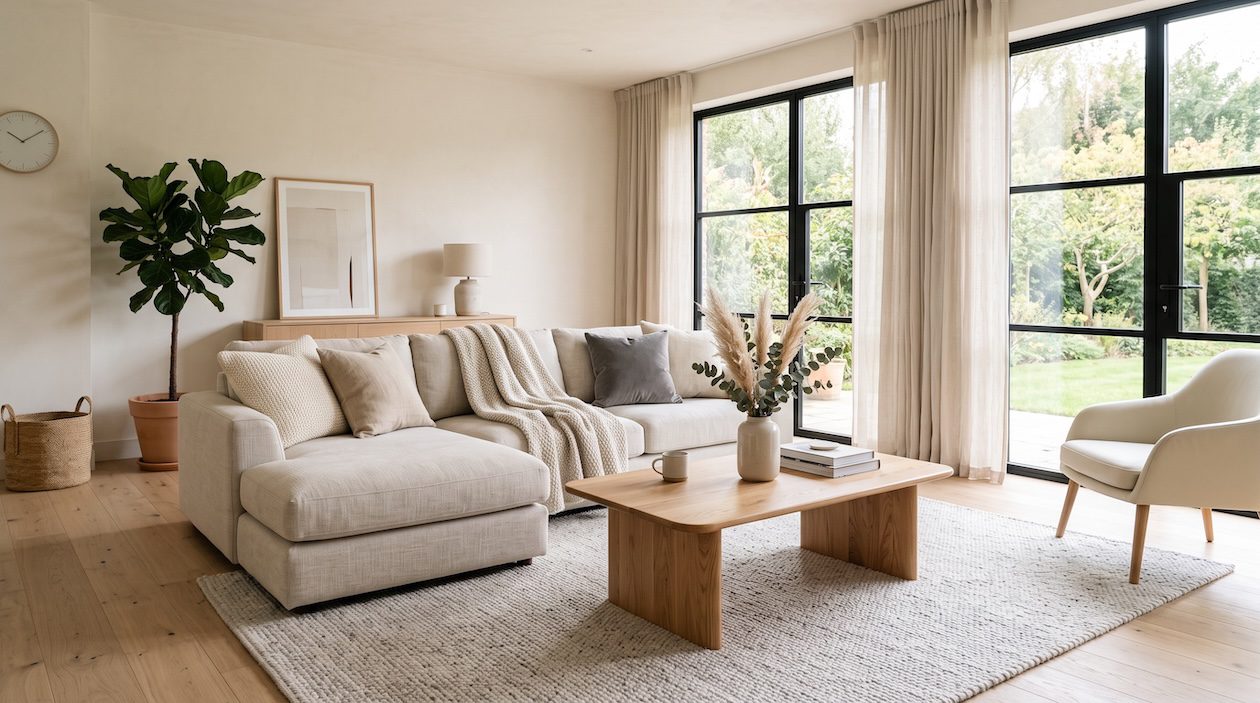
Imagine a room with white oak flooring, a warm stone fireplace, linen upholstery, a wool rug, woven accents, and a few dark metal details.
Each material performs a different visual job. Wood provides warmth. Stone adds weight. Fabric brings softness. Woven fibers introduce texture. Metal provides definition.
Remove that variation and the room may begin to feel flat, even if every individual selection is beautiful.
Contrast Texture as Well as Color
Designers consider more than whether colors coordinate.
Smooth can sit beside rough. Matte can contrast with subtly reflective. Soft upholstery can balance hard stone. Pale woods can be grounded by darker details.
Thinking in these pairs can make a restrained palette significantly more dynamic without introducing unnecessary décor.
Carry the Material Palette Outdoors
Southern California living often blurs the boundary between interior rooms and exterior entertaining areas, so the material story should not abruptly end at the doors.
California Casual Does Not Stop at the Sliding Doors
Covered patios and outdoor living spaces can continue the same design language through complementary stone, wood tones, woven furniture, outdoor upholstery, planters, and metal details.
Materials exposed to weather should, of course, be selected specifically for exterior conditions. The goal is not necessarily to use identical materials inside and out, but to create a visual relationship between them.
Repetition Creates Indoor-Outdoor Continuity
Repeating a warm stone tone, similar wood color, woven texture, or upholstery palette can help adjacent spaces feel connected.
This becomes especially important when exterior areas are visible through large windows or sliding doors. From inside, the patio effectively becomes part of the room’s visual composition.
What Makes a Material Feel Timeless Instead of Trendy?
“Quiet luxury” may eventually be replaced by another design term, but the materials associated with it have been used in interiors for generations.
Natural Materials Tend to Age Rather Than Simply Go Out of Style
Wood can deepen in tone. Certain metals develop patina. Stone carries natural markings. Many linen textiles can soften with use.
That does not mean every natural material is maintenance-free or suitable for every application. It means that visible variation and signs of age can sometimes become part of the material’s character rather than automatically making it feel dated.
Avoid Choosing Everything Based on the Current Aesthetic
A material should make sense for the architecture, climate, lifestyle, maintenance expectations, and intended use of the space.
That is particularly important with permanent selections such as flooring, cabinetry, countertops, and architectural stone. These materials are expensive and disruptive to replace, so their suitability for the home matters more than whether they perfectly match a current trend.
Building a Cohesive Material Palette for the Entire Home
A strong material palette is easier to create when selections are considered as part of a larger system rather than room by room.
Start With the Permanent Materials
Begin with the elements that are most difficult to change: flooring, cabinetry, countertops, fireplace materials, tile, and architectural finishes.
Look at undertones, texture, scale, and how the materials respond to the home’s natural and artificial light.
Once this foundation is established, furnishings can build on it.
Add Softness and Contrast Through Furnishings
Upholstery, rugs, pillows, window treatments, lighting, and accent furniture offer opportunities to introduce softer textures and controlled contrast.
These layers are also easier to update over time, allowing the permanent architecture to remain relatively timeless while the furnishings evolve.
Repeat Materials Without Making Every Room Identical
Cohesion does not require using the exact same finishes everywhere.
A wood tone from the kitchen might reappear in a living room table. A stone color could influence a rug or upholstery selection elsewhere. Bronze hardware might connect visually with lighting in an adjoining room.
These subtle repetitions create a common material language while still allowing each space to have its own character.
Bring California Casual Luxury Home With WRF
The most elevated California casual homes do not announce their luxury. They reveal it through warm woods, tactile fabrics, natural stone, layered textures, and thoughtful details that make every space feel connected.
WRF helps homeowners in Solana Beach, San Diego, and throughout Southern California bring those elements together through thoughtful interior design services, furniture, custom upholstery, cushions, pillows, fabrics, and other customized design elements. By considering materials alongside the architecture, lifestyle, and indoor-outdoor character of the home, WRF can create interiors that feel relaxed, refined, and distinctly personal.
Whether you are furnishing a single space or developing a cohesive material palette throughout your home, WRF can help turn California casual inspiration into a layered, livable interior designed to feel beautiful for years to come.
FAQs About Quiet Luxury and California Casual Design
What materials work best for a California casual interior design style?
Natural materials such as warm wood, limestone, travertine, linen, wool, jute, cane, and aged metals work especially well with the California casual interior design style. Combining these materials gives a living room or whole home warmth and texture while maintaining the relaxed, refined character associated with modern California design.
How do you make a neutral living room feel luxurious instead of plain?
Focus on material variation rather than adding more décor. Layering wood, stone, woven textiles, tactile upholstery, and understated metals gives a neutral living room design depth. Varying smooth, rough, soft, and matte surfaces can make the space feel sophisticated without sacrificing the simplicity of the overall design style.
How can an interior designer keep quiet luxury from looking too trendy?
A thoughtful interior design starts with the architecture and lifestyle of the home rather than a particular trend. An interior designer can build the palette around timeless flooring, cabinetry, stone, furniture, and textiles, then repeat complementary materials throughout the home to create a cohesive look that can evolve over time.

 Pursu Agency